
The Smell Hits You Before the Memory Does
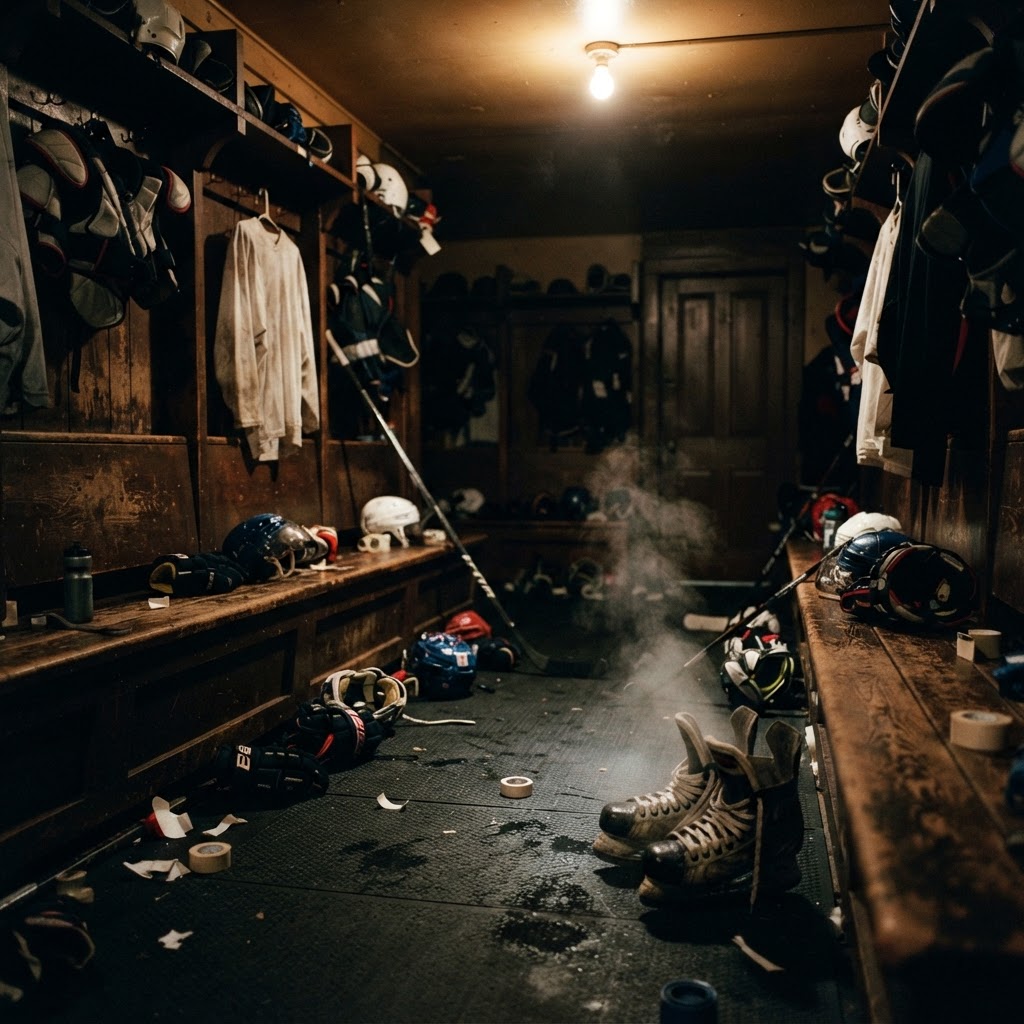
There's a moment, usually in a parking lot or a hallway, when it arrives before anything else. Before the sound of blades, before the shouts from the bench, before the cold bites your face — the smell finds you first. And if you've ever played this game for any real stretch of time, your whole nervous system knows exactly where you are before your eyes confirm it.
Non-hockey people describe it as awful. They're not wrong. They're also completely missing the point.
Because what they're smelling is time. Hundreds of hours of effort compressed into foam and nylon and old sweat and whatever tape adhesive does when it ages. It's a working document. A record. The smell of hockey gear isn't a problem to be solved — it's proof that someone showed up.
What's Actually In There
Let's be honest about the chemistry, because it deserves some respect. Hockey gear smell is not simple. It's layered, complex, almost geological. You've got base-layer sweat soaked into shoulder pads that dried a hundred times over without ever fully airing out. Glove leather — that distinctive damp-palm smell that no amount of febreze has ever actually touched. Helmet foam that has absorbed years of forehead, chin, the specific anxiety-sweat of overtime. Skate boots that have been wet and dried so many times the inside has developed its own ecosystem.
Add in the ambient rink — ice resurfacer exhaust, cold rubber matting, the metallic cold-air smell that lives in every arena regardless of the country — and what you get is not a bad smell. It's a dense smell. A compressed smell. The smell of a sport that doesn't let you off easy.
Every piece of gear in that bag is a chapter. The gloves smell different from the shin pads. The helmet has its own signature. The bag itself — usually the worst offender — has become a kind of terrarium for all of it. Leave it zipped in the trunk for forty-eight hours after a game and you'll understand why wives open the garage door from ten feet away.
The Bag as Biography
Old-timers have gear that doesn't smell anymore. Not because it's clean — because it's transcended. There's a point, somewhere around fifteen or twenty years of consistent use, where the smell stops being offensive and starts being ancestral. It's just what that person smells like now, a few degrees removed from their actual person.
You know these guys. They show up to the rink and the whole dressing room gets a faint signal that someone serious has arrived. Their bag is battered, patched, held together with commitment and possibly one bungee cord. The smell coming off their gloves when they walk in isn't unpleasant — it's *earned*. It smells like someone who has been doing this since before you owned your first pair of skates.
Newer gear smells different. Cleaner, obviously, but also uncertain. Fresh shin pads have that factory smell — rubber and plastic and something vaguely synthetic. New gloves smell like a promise that hasn't been tested yet. There's no depth to it. Nothing has happened in them. You can always tell a guy's experience level, to some degree, by whether his gear smells like a sporting goods store or like actual hockey.
The Dressing Room Is a Collective Organism
The individual bag smell is one thing. The dressing room is another category entirely.
Walk into a dressing room at the end of a long season, ten or fifteen minutes before game time, and what you're experiencing is not one smell but twenty of them, all at once, hitting the same warm humid air that smells of tape and rubber and whatever someone brought to eat in the car. It's overwhelming and totally specific. There is no other smell like it anywhere on earth.
This is where team chemistry either exists or it doesn't, and the smell is part of it. A good dressing room feels alive. Loud, dense, layered — guys pulling on gear, chirping, going through routines they've had since minor hockey. The smell is part of the fabric of it. Cold arenas don't smell cold inside the room. They smell warm and cramped and human and competitive.
Anyone who's had the experience of walking into a *quiet* dressing room before a big game knows the smell intensifies somehow. Same gear, same room, but when everyone's focused and quiet, you notice it more. It sits in the air differently. The smell of the room before a playoff game is not the same as the smell before a Tuesday regular-season game and every player knows this without being able to explain why.
The Parents Who Carried It
For a whole generation of hockey kids, the smell of the game first arrived secondhand — in the back of a minivan, or in a mudroom, or wafting from the basement where the gear lived on a drying rack that never fully did the job. Hockey parents develop a relationship with the smell that is entirely different from the player's relationship. They're not creating it. They're just living with it.
The kid doesn't smell it. That's the thing no one talks about. Players develop a total blind spot to their own gear. It's like how you can't smell your own house — you're too inside it. The smell lives somewhere outside of you, for everyone else to deal with. You just know that your gear smells like *gear*, which is to say it smells like the game, which smells like your life.
Parents, though. Parents remember. Decades later, long after the gear has been retired or passed down or thrown out, they'll catch a similar smell — in a sports shop, at a rink they're just passing through — and it'll take them back immediately. Not to any specific game, but to *all of them*. The 5am drives. The dark parking lots. The kid half-asleep in full kit in the back seat on the way home. The smell carries all of it.
Why Nobody Actually Wants It to Go Away
There's a gear-cleaning industry built around this smell. Sprays, washes, UV bags, ozone machines. And look — it's probably fine to clean your gear. It's probably the right call. Nobody's arguing against basic hygiene.
But there's a reason that when players finally retire the old stuff — truly retire it, hang the gloves up for good — they sometimes keep one piece they can't explain. The gloves, usually. Or the helmet. Something goes in a bin in the garage or on a shelf somewhere. Not for any practical reason. Not because they plan to use it again.
Because the smell is still in it, and the smell is a time machine, and they're not ready to let go of wherever it takes them.
That's the honest version. The smell of hockey gear is inseparable from the feeling of playing hockey, which is inseparable from being the kind of person who plays hockey — which, once it's in you, is not something that leaves. You can stop playing. You can't stop being a hockey player. The smell knows this. It stays with you long after the gear doesn't.
Non-hockey people will never get it. That's fine. It was never for them anyway.
From the Collection
The Hard Around kit is built for people who know what that smell means. Check the collection at /product/474288275 — gear for people who actually play.
Explore the drop →