
the shift that no one claps for
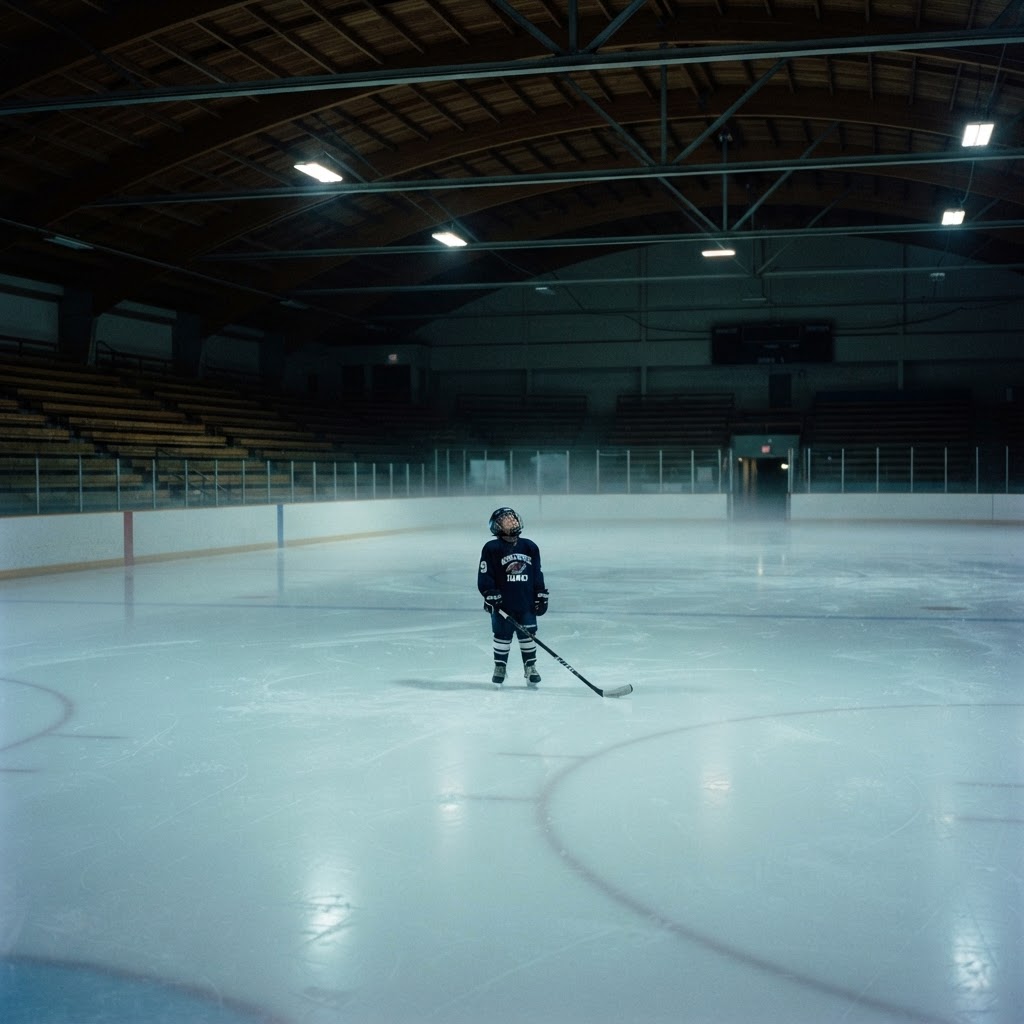
There's a shift that happens in every junior hockey game that nobody notices. A twelve-year-old defenseman reads a two-on-one, takes away the pass, doesn't get the puck, doesn't hit anybody, doesn't do anything that shows up on a scoresheet. He just made the right read. He controlled his gap. He thought the play instead of reacting to it.
The stands don't move. His dad is probably checking the score of another game. His coach gives a small nod from the bench. And the kid skates back to his position already thinking about the next one.
That shift is everything. And almost no one watching actually sees it.
The Scoreboard Is a Terrible Teacher
Junior hockey has a scoreboard problem — not because scores don't matter, but because we've let the scoreboard become the only language parents and kids understand. Win big, good game. Lose, bad game. Score, you're doing great. Go pointless, you must be struggling.
It's a brutal reduction of a sport that is genuinely complex. Hockey is a game of decisions made in fractions of seconds, of spatial awareness built over years, of communication between players who barely have time to look at each other. None of that shows up on the scoresheet. None of it gets cheered from the stands.
The kids who learn to play for the scoreboard alone become one-dimensional. They chase pucks instead of positioning. They hold onto it too long because they want the goal. They take the highlight play over the right play, every time, because that's what gets the reaction.
The kids who learn to play beyond the scoreboard? Those are the ones still playing at twenty-five, at thirty, at forty. Not always at higher levels — sometimes just with more joy, more understanding, more love for the actual game.
What Coaches See That Parents Miss
Ask any junior coach what separates the kids who develop from the ones who plateau, and almost none of them will say talent first. They'll say coachability. They'll say compete level. They'll say the ability to handle a correction without falling apart.
That last one is the quiet killer of junior development. A kid gets pulled off the ice after a defensive zone mistake and looks over at his parents in the stands instead of at his coach. A kid takes a line change after a turnover and sulks instead of watching the play. A kid gets criticized on a drill and shuts down for the rest of practice.
These aren't character flaws. They're learned responses. Kids who grow up in environments where mistakes are treated as catastrophes learn to protect themselves from the feeling of being wrong. So they stop taking risks. They stop trying new things. They play not to fail instead of playing to figure it out.
The coaches who understand junior development know that the correction after the mistake is more valuable than the mistake itself. The moment a kid hears what went wrong, understands it, and carries that information into the next rep — that's actual development. That's the whole game, really, compressed into a thirty-second interaction between a coach and a twelve-year-old at the bench.
The Team Doesn't Care What Your Stats Are
One of the most underrated lessons junior hockey teaches — when it's taught right — is that the team doesn't care about your individual numbers. Not in the way you think they do.
Inside a good dressing room, the currency is different. Who showed up for practice when it didn't matter? Who blocked a shot in a game nobody came to watch? Who made the pass instead of taking the shot? Who sat next to the new kid during the first road trip?
Kids who come up in good programs learn this early. They learn that you earn respect in a dressing room through consistency, not highlight plays. They learn that the teammate who never scores but always backchecks is worth more than the guy who scores twice and dogs it on the way back.
This is one of the things hockey does better than almost any other sport at the junior level — when the culture is right, the team genuinely polices its own values. The dressing room teaches kids what coaches and parents sometimes can't: that how you play matters more than what the final line says next to your name.
The danger is when individual development becomes a competition between parents instead of a shared project. When the culture shifts from *our kids are learning to play a team game* to *my kid needs more ice time than your kid*, something breaks. The dressing room feels it even when no one says it out loud.
The Pressure Nobody Talks About
Let's be honest about something. Junior hockey in a lot of places has developed a pressure problem, and it doesn't come from the ice. It comes from the parking lot after the game. It comes from the dinner table on the drive home. It comes from the parents who have quietly decided that their ten-year-old is going somewhere, and every practice and every game and every rep is an audition.
Kids feel this. They feel it acutely, the way kids feel everything their parents are projecting even when nothing is said out loud. And what it does to their relationship with the game is devastating — slowly, quietly, invisibly.
The kid who used to sprint to get his skates on now dawdles in the dressing room. The kid who used to want to stay after practice now asks when they're leaving. The kid who used to play street hockey in the driveway now comes inside after ten minutes.
That's not a talent problem. That's a pressure problem. And the solution isn't a different program or a different coach. It's a different conversation on the way home from the rink.
The question *how did you play?* carries weight. The question *did you have fun?* sounds simple but it's actually doing something different — it's telling the kid that their experience matters, not just their performance. It's a small thing. It's not a small thing.
Let Them Be Bad at It for a While
Every good player has a story about the time they were terrible. The great ones usually have several. The awkward season when they grew six inches and couldn't find their edges. The year the game got too fast and they couldn't keep up. The stretch where nothing worked and they almost walked away.
Development is not a straight line. It never has been. The kids who look the best at eleven are sometimes the ones who peaked early and discovered the game had moved on without them by fifteen. The kids who struggled and stayed, who got worse before they got better, who learned to sit with the discomfort of not being the best player on the ice — those kids often end up with the deepest relationship with the game.
Junior hockey should be a place where kids are allowed to be bad at things while they figure out how to be good at them. Where a wrong read in a game is a data point, not a disaster. Where trying a move and losing the puck is understood as the cost of learning that move.
The rinks that get this right are the ones that produce players who still love hockey at thirty. Not because those players all went on to play at high levels, but because they learned to play for themselves — for the feeling of it, the problem-solving of it, the community of it.
The Game Gives Back What You Put In
Here's what junior hockey is actually teaching, underneath all the drills and systems and early morning practices: it's teaching kids how to commit to something hard. How to show up when you don't want to. How to be part of something bigger than your own stat line. How to fail and come back the next day.
None of that requires the kid to make the NHL. None of that requires a scholarship or a billet family or a major junior contract. It just requires the game to be given space to do what it does — to be difficult, to demand something, to reward consistency and effort over time.
The next generation of hockey players is out there right now, in cold rinks on weekday mornings, taping their sticks wrong and falling on breakaways and learning the game through mistakes they won't remember and lessons they'll carry for the rest of their lives.
Let them play. Let them be bad. Let them figure it out.
That's the whole thing, really.
From the Collection
The Hard Around Identity Tee is built for people who understand the game beyond the scoresheet. Available now at /product/472176454
Explore the drop →