
The Quiet Ones Who Run the Room
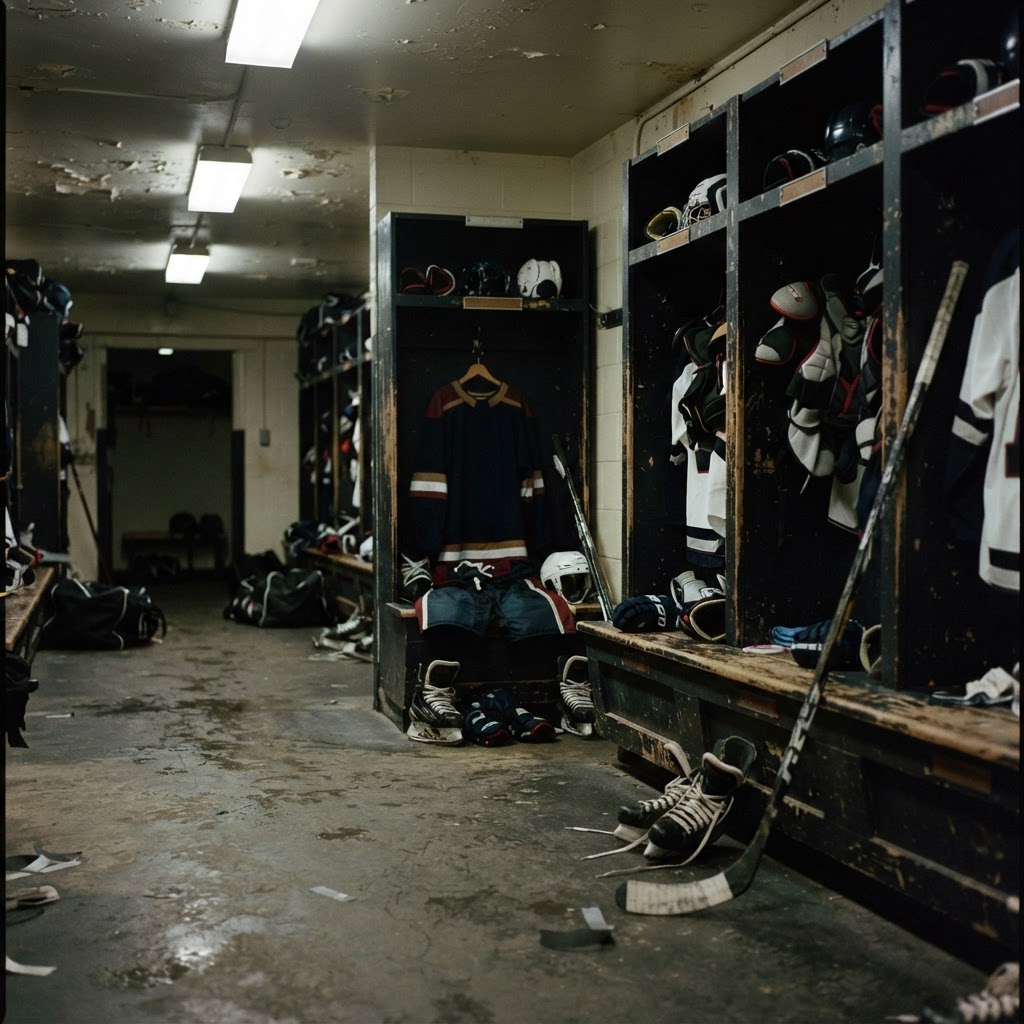
There's always someone talking in the dressing room. That's not the guy we're writing about.
We're writing about the one in the corner, second stall from the door, lacing his skates like it's the only thing that exists in the world right now. He's not ignoring you. He's not antisocial. He's just already somewhere else — already on the ice, already in the game — while the rest of the room is still figuring out what playlist to put on.
Every team has one. And if you've played long enough, you already know exactly who yours is. You also know, without anyone ever saying it out loud, that when he goes quiet, everyone else starts to settle down too.
The Room Has a Temperature and Someone Controls It
Dressing rooms run on emotional weather. There are loud rooms, loose rooms, tight rooms, rooms where the wrong joke at the wrong time can crack something fragile. Most of the time nobody's officially managing any of it — it just happens, shaped by whoever sets the tone first.
The loud guy gets most of the credit. He's the one cracking chirps at the D-man's pants, blasting something from a phone speaker mounted on the shelf with hockey tape, making sure nobody's too deep in their own head before warm-up. He's important. Every good room has one.
But the quiet one is doing something different. He's not performing. He's not filling silence because silence makes him nervous. He's comfortable in it — and that comfort is contagious in a way that nobody can quite explain. When he sits down and starts his routine, the room follows him down a level. The jokes get shorter. The tape-cutting gets more deliberate. People start actually preparing instead of just being loud about it.
He sets a floor. Not a ceiling — the energy can still build — but a floor. A baseline of seriousness that holds the room together when the game matters.
The Routine Is the Message
The quiet guy's power comes from consistency. He does the same things in the same order every single time, and it's not superstition so much as it is signal — this is what taking it seriously looks like. Watch close enough and you'll notice the rookies start mirroring him without realizing it.
He tapes his stick the same way. He lays his gear out in the same sequence. He doesn't check his phone once he's fully dressed. He doesn't need to be asked to get ready — he already is, and he has been for ten minutes while half the room is still looking for a missing glove.
There's a version of this in every locker room at every level. In beer league it's the guy who played junior and still shows up like it's game seven of a provincial championship. In rep hockey it's the sixteen-year-old who came up through a program that actually taught him what preparation looks like. In old-timer hockey it's the fifty-three-year-old who has played his whole life and treats the ritual of getting dressed with the same quiet reverence he always has.
The ritual is the message. And the message is: this matters.
What He Never Says
The thing about the quiet room-runner is that he almost never gives a speech. He doesn't stand up before warm-up and tell everyone to want it more. He doesn't make noise after a bad period. He doesn't pull anyone aside for a heart-to-heart about compete level.
He doesn't need to. The room already knows what he'd say because they can see it in how he carries himself.
There's a specific kind of authority that comes from not performing authority. Players can smell fake intensity from across the ice. They've had coaches who yelled and meant nothing. They've had captains who gave fire speeches and then disappeared when the game got hard. The quiet guy has no speeches to evaluate, no intensity to fake. He just does what he does and it either means something to you or it doesn't.
Most of the time it means something to everyone.
The first time the room really gets loud after a good period or a big goal, watch where the energy bounces to. The loud guys feed off each other. But the moment that tips the whole room, the beat where it goes from celebration to belief — that's usually when the quiet guy cracks a small smile, or stands up, or just nods. One gesture. Enough.
Every Room Also Has the Guy Testing the Limits
For all the reverence the quiet one commands, there's always someone who mistakes quiet for weakness. Usually a younger guy, or someone new to the team, or just someone whose antenna isn't calibrated right.
He pushes the volume too loud before a big game. He makes a joke that doesn't land. He talks through the thirty seconds before you leave for the ice, which is basically sacred ground in most rooms.
And the quiet guy doesn't explode. He doesn't call the kid out in front of everyone. He just — doesn't laugh. Doesn't respond. Makes it clear with zero words that something just happened that he didn't like.
That silence lands harder than anything else could. Ask anyone who's been on the receiving end of it. You feel it in your chest. You think about it for the whole first period.
The unwritten rules of a dressing room aren't written anywhere, but they're enforced constantly, mostly through exactly these kinds of tiny, wordless corrections. The room teaches you who it is. The quiet ones are often the ones doing the teaching.
The Stall Next to His
If you've ever had the stall next to the quiet guy, you know it changes how you prepare. Not because he asks anything of you — he doesn't — but because you can feel the intentionality radiating off of him like heat off fresh ice.
You find yourself doing your routine more deliberately. Taping with purpose instead of just going through the motions. Not because you're trying to impress him, but because being next to that kind of focus makes you want to match it. It raises your own standard in a way you can't fully articulate afterward.
This is actually one of the underrated currencies of team sport. Not plays, not stats, not leadership speeches — just proximity to someone who genuinely gives a damn about doing things right. It's transferable. It spreads.
A room full of guys who found their routines, who dress with intention, who understand that the thirty minutes before warm-up is part of the game — that room plays different. Doesn't matter if it's triple-A or Thursday night beer league. The care shows up on the ice.
After the Final Buzzer
Here's where it gets interesting. Because the quiet, serious pre-game guy is almost always the exact opposite after the game.
Once the result is in — win or loss — he loosens up completely. The beer comes out and he's the first one reaching for it. The chirps start flying and he's got material saved up that he's been sitting on for three periods. He laughs loud. He sticks around until the room clears out.
Because it was never about being serious for the sake of it. It was about being serious when the game demanded it. Once the game's done, it's done. The room shifts back to just being a room full of people who like each other and like hockey and earned the right to sit here together.
That distinction — knowing when to lock in and when to let go — is maybe the most important thing the quiet guy models for everyone else. The game gets the best version of you. Everything else gets the rest.
And the rest, honestly, is pretty good too.
From the Collection
The Hard Around Black Recycled hockey jersey is built for people who know what the room feels like before a big game. Available now at /product/474267256.
Explore the drop →