
The Parent in the Parking Lot at 5:45 AM
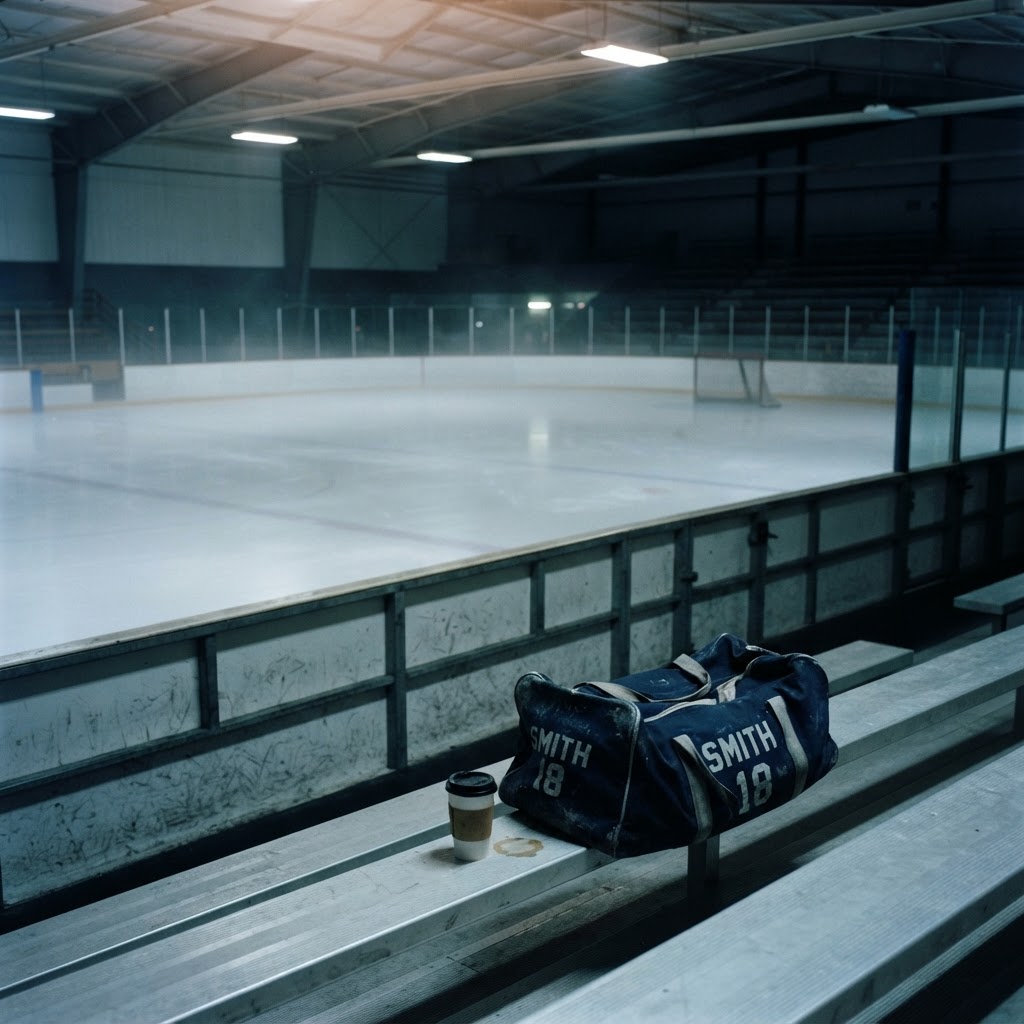
There's a particular kind of tired that only hockey parents know. It's not the tired you get from a bad sleep or a long week at work. It's a bone-deep, years-long exhaustion that somehow coexists with an almost irrational willingness to do it all again next weekend. To set the alarm for 4:50. To find the missing skate guard. To sit in a rink so cold you can see your breath and call it a Saturday morning well spent.
We talk a lot about the players in hockey culture. The grinders, the skill guys, the goalies with their particular brand of madness. We talk about the dressing room, the ice, the game. But the story of how anyone actually gets to that dressing room — that story starts in a dark house, with a parent who was already up before the alarm went off.
This isn't a sentimental piece about hockey moms and dads. Sentimentality is cheap. This is about what the commitment actually looks like, ground level, in the parking lot, in the cold, year after year.
The Bag Is Always Too Heavy and It's Always Your Problem
At some point, every hockey parent has a moment of genuine disbelief standing in a pro shop. You're holding a piece of equipment — shoulder pads, a helmet, a new pair of skates — and you're doing the math in your head, and the math doesn't work. Hockey is an absurdly expensive sport before your kid ever steps on the ice for the first time.
And yet. You buy it. Because they love it, and because watching someone you raised skate for the first time with some actual confidence is worth more than the number on the receipt. You tell yourself that. You keep telling yourself that through atom, through peewee, through the years when they grow three inches in four months and suddenly nothing fits anymore.
The bag itself becomes its own kind of relationship. Hockey parents develop a loading system. A specific order — skates here, shin guards like this, helmet on top. They can pack a full set of hockey gear in under four minutes in a dark hallway at 5 AM without waking anyone else in the house. That's a skill nobody puts on a resume but absolutely should.
5:45 AM Is Its Own Culture
There's a community that exists only in the early morning hours at minor hockey rinks, and it is unlike any other. The parents who show up for the 6:15 ice time have a different energy than the rest of the world. They're not exactly awake, but they're present. They nod at each other across the lobby. They hold doors without being asked. They share the particular solidarity of people who have all made the same strange choice.
The coffee is always bad. Nobody mentions this. The machine in the lobby dispenses something that is technically coffee in the way that a Zamboni is technically a car. It doesn't matter. You drink it standing up with your jacket still on, watching your kid take laps during warm-up, and it is somehow exactly right.
The conversations in the bleachers at that hour are different too. Nobody has their guard up at 6 AM. You hear real things. Worries about whether their kid is keeping up. Pride that they're trying to keep quiet because they don't want to jinx it. Genuine curiosity about the game — parents who played and parents who never did, all trying to understand what they're watching. Early morning hockey rinks are weirdly honest places.
The Line Between Cheering and Losing the Plot
Let's not pretend every hockey parent is a stoic saint in the stands. The culture has its shadows. The parent who is way too loud. The one who coaches from the glass between periods, contradicting everything the actual coach just said. The one who has decided, definitively, that their nine-year-old is being held back by the system.
Most hockey parents, if they're honest, have been closer to that line than they'd like to admit. The game gets fast, the call goes against your kid, and something primal kicks in before the reasonable part of your brain catches up. You hear yourself and think: when did this happen to me.
The best hockey parents figure out the difference between being engaged and being a problem. They cheer for the whole team. They read the room — if the kid is upset after a loss, they let it breathe before they start the debrief. They understand that the car ride home is a minefield and they've learned, usually through having blown it at least once, to ask one question and then just drive.
That emotional regulation — that's actually hard work. It doesn't get enough credit.
What They Actually Sacrifice
The time is the obvious one. Minor hockey is a second job. It has scheduling demands, volunteer commitments, tournament weekends that eat entire long weekends in cities three hours away. It has playoff runs that extend the season just when you thought you could reclaim your Saturdays.
But the less obvious sacrifice is social. Your non-hockey friends stop inviting you to things because you're always at the rink. Your own hobbies get compressed into whatever gap exists between drop-offs and pick-ups. Some parents give up recreational leagues of their own because there simply isn't space in the week. They traded their ice time for their kid's.
Nobody makes that trade grudgingly, not really. But it's still a trade, and it quietly reshapes a person over a decade of minor hockey. The parents who've been in it longest have a particular look — not tired exactly, but rearranged. Like people who have organized their whole interior life around something outside themselves, and mostly made peace with that.
The Ones Who Never Miss a Game
There's always one. Sometimes two. The parent who has seen every single game their kid has ever played. Rain, ice storm, work conflict, personal chaos — doesn't matter. They're there, in the same spot in the bleachers, wearing the same team colours they've been wearing for six years.
Ask those parents about it and they'll shrug. What do you want me to say, I like watching my kid play hockey. As if it's nothing. As if showing up, without exception, for years, is the default and not actually a remarkable thing.
The players notice. Kids are perceptive about presence in ways they won't be able to articulate until they're much older, looking back. They know who's there and who isn't. The parent in the stands isn't just a spectator — they're a signal. They're telling their kid, without a word, that the thing you care about, I care about too.
That's not nothing. That's the whole thing.
When It Ends
Minor hockey stops. It stops abruptly, or it fades, or the kid makes a choice to walk away from it, and suddenly the Saturday mornings are just Saturday mornings again. The bag sits in the garage. The skates hang on a hook.
Parents who've been through it describe this transition in ways that sound almost like grief. Not because they miss the 5 AM alarms — nobody misses those — but because the structure of it, the shared purpose of it, the rink as a third place where your family existed together, that disappears. You realize the hockey wasn't just the hockey. It was the container.
Some of them start playing themselves, or get back into it. They find a beer league, borrow some equipment, figure out the rest. The rink pulls them back in a different form. Others just stay connected through the game — watching, coaching, running the clock at the local arena on weekends, still around the ice because they can't quite let it go.
The players who go on — to junior, to college, to whatever version of the game they carry into adulthood — they carry those parents with them. Not always consciously. But the habits, the early mornings, the willingness to show up when it's hard and cold and inconvenient — that wasn't just learned on the ice. It was learned watching the person who got them there.
From the Collection
The Hard Around Trademark hoodie was built for rink hallways and cold bleachers. If you know, you know. Available at /product/472139470.
Explore the drop →