
the guy who runs the rink knows something you don't
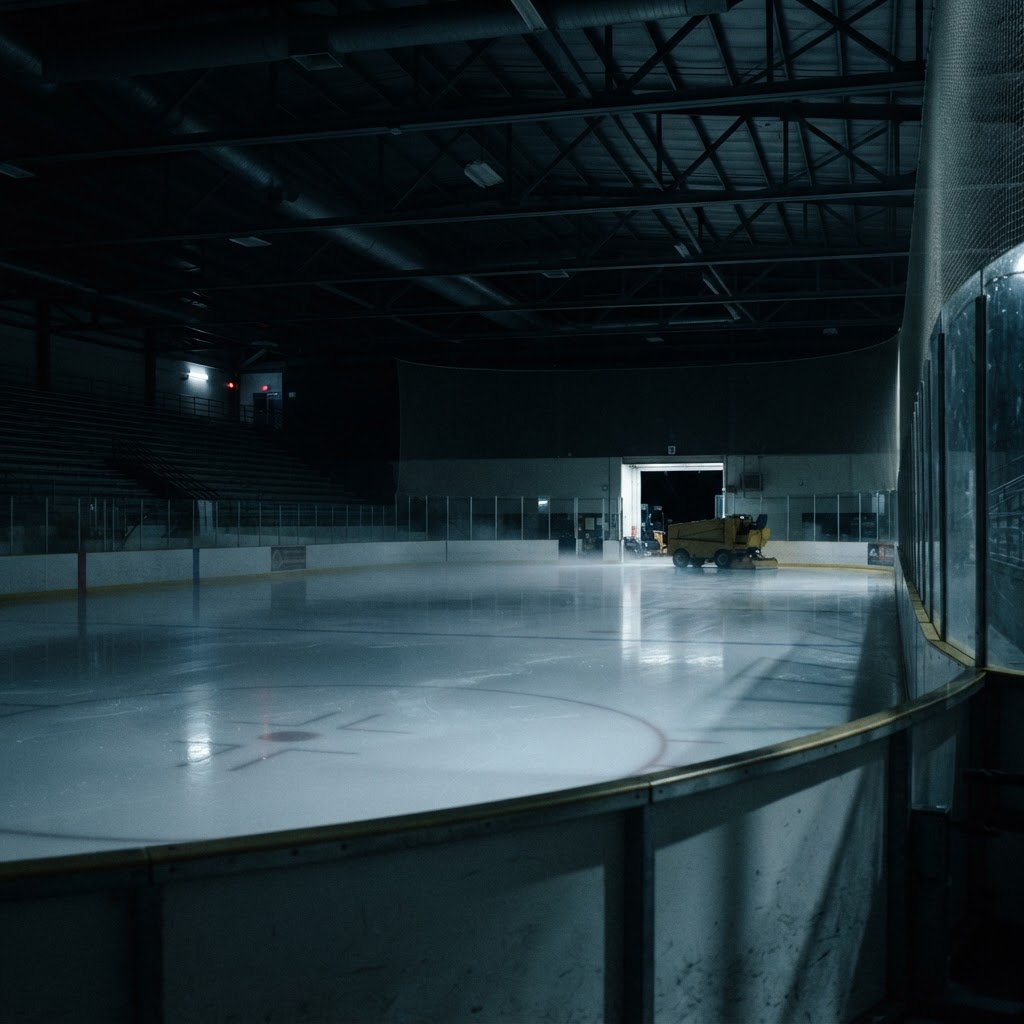
There's a man at a rink in northern Ontario who has been flooding the ice since 1987. He drives the Zamboni with the same unhurried authority as someone who has long since stopped needing to prove anything. His name is on nothing. There's no plaque. But every single person who has ever laced up in that building knows his name, and most of them owe him something they can't quite articulate.
We talk about hockey culture like it lives in the players. In the goals and the fights and the dressing room speeches. But there's another layer underneath all of that — a quiet, load-bearing infrastructure of people who keep the ice cold and the doors open. The ones who know where the extra pucks are. Who remember your kid's name from two seasons ago. Who will let a team run ten minutes over because they know what the game means tonight.
They don't get the headline. But they are, in a lot of ways, the whole story.
the rink rat who never clocked out
Every arena has a version of this person. Sometimes they started as a kid hanging around the pro shop doing odd jobs for free ice time. Sometimes they were a player who got hurt, or aged out, or just couldn't walk away from the building when the season ended. The rink became the job. The job became the identity.
You know them by the way they move through the space. No hesitation. No wrong turns. They know which locker room door sticks in winter, which hallway floods when it rains hard, which ref is going to be late on a Tuesday. They carry a ring of keys that looks like it belongs to a medieval castle and they use every single one.
They are not nostalgic in the way outsiders romanticize hockey. They are practical about it. The rink is a building that needs constant attention — compressors and boards and plumbing and scheduling — and they are the ones keeping it all from collapsing between games. But ask them why they stay, and they'll say something simple. Something that cuts right through. *Where else would I go?*
what gets passed down at the front desk
The front desk at a local rink is one of the most underrated information hubs in any community. It knows everything. Who's going through a divorce. Which coach just got fired. Which atom team is actually good this year and which one is running a charity case for a connected parent. The person behind that desk has heard it all at drop-off and pickup, in passing, in the low voices people use when they think no one's listening.
They also hold the institutional memory of the building. They remember the team that won the provincial championship in 2004. They remember the kid who scored five goals in one game and never came back because his family moved west. They remember the Christmas tournament that ran four hours over schedule and the parent who tried to fight the timekeeper over it.
That memory matters. It's the connective tissue between generations of players who never overlapped, who share the same ice without ever knowing each other. The rink staff are the ones who carry that thread.
the zamboni driver and the theology of the clean sheet
There is something almost ceremonial about the Zamboni coming out. The buzzer sounds, the doors open, and the machine rolls out with this slow, steam-trailing authority. The ice that was rutted and chopped and marked up by forty minutes of hard hockey gets smoothed back to nothing. Clean start. Every time.
The person driving that machine has seen more hockey than most coaches. They've watched thousands of games from the highest vantage point in the building — or from right at ice level, depending on the rink — and they've developed opinions. Strong ones. They know when a team has quit before the players do. They can read a period in the ice conditions: the ruts, the deep cuts near the crease, the spots where someone kept dumping pucks into the same corner all night.
Ask a Zamboni driver who the best player they ever saw at this rink was and they'll tell you without hesitation. It won't be the kid who went on to junior. It'll be some 45-year-old guy who plays Tuesday nights and still has hands like he never stopped. They've got perspective that no one else does. The ice doesn't lie to them.
the volunteer who shows up anyway
At the youth level, there is an entire invisible workforce holding the whole thing together. The parent who gets to the rink at 5:45am to run the gate. The one who's been keeping the official score sheet for the association for twelve years and has never missed a game. The woman who runs the canteen at a loss because someone has to and the money goes back into ice time for kids whose parents can't afford the full cost.
None of them played. Most of them never had any particular connection to hockey until their kid got hooked at age six. But somewhere along the way the rink got into them too, and now they're here every weekend in November, every dark Tuesday morning in January, every Saturday playoff game in March that runs ninety minutes over because the scoreboard broke and no one could figure out the backup timer.
They don't get thanked enough. The kids don't know their names. The parents who do know their names sometimes forget to say anything. But when one of them steps back — retires, moves, burns out — the whole system staggers for a season while everyone figures out where the tape was kept and how the schedule actually worked.
the rink at 11pm, when everyone's gone
There's a version of the rink that almost no one sees. After the last game, after the Zamboni does its final pass, after the locker rooms have emptied and the lights in the hallway have gone to their dim after-hours setting — the building has a completely different feeling.
The ice sits there, perfect and blue-white under whatever lights are still on. The smell is pure then. Cold and clean and a little bit electric. The boards creak in the quiet the way old buildings do. Somewhere a compressor hums.
The person locking up has stood in this moment hundreds of times. Maybe thousands. They don't make a big deal of it. But they feel it. The weight of all the games that happened here and all the ones that will. The rink is empty but it isn't hollow — it's full of something harder to name. Potential, maybe. Or just the particular dignity of a place that serves a real purpose for real people.
They check the locks. They turn out the lights. They come back tomorrow.
why none of this is small
We are quick to celebrate the highlight. The overtime goal. The save that shouldn't have been possible. The first goal a kid scores and the way their whole face changes. Those moments are real and they matter.
But they only happen because someone kept the building running. Because someone flooded the ice at 4am so it would be ready for the 6am practice. Because someone stayed late to fix the heater in dressing room three so the peewee team didn't freeze getting dressed. Because someone answered the phone and sorted out the scheduling conflict and made sure there was actually ice to play on.
Hockey culture gets romanticized in a lot of directions. The dressing room code. The handshake line. The gear. The superstitions. All of it is real. But the heartbeat of the local game — the actual pulse of it — runs through the people who treat the rink like it's worth keeping. Like the building itself is part of the game.
It is. It always has been. We just don't say it often enough.
From the Collection
The Hard Around Duffle is built for people who actually show up — early mornings, late nights, and everything between. Available now at /product/474416288
Explore the drop →