
The Tape Job That Told You Everything About a Player
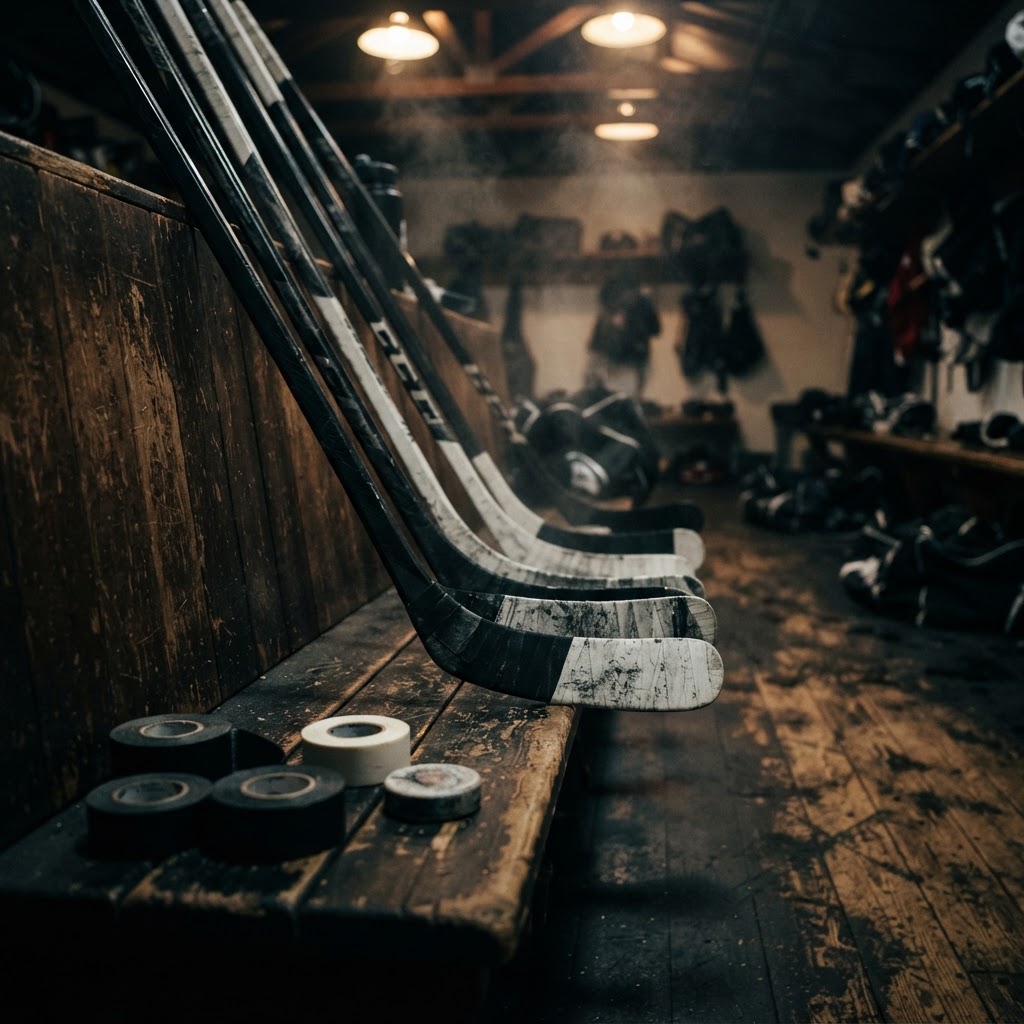
There's a ritual that happens in every dressing room before every game, at every level of hockey, in every cold building from Moose Jaw to Minnesota. It doesn't get announced. Nobody makes a ceremony of it. But everybody watches, even when they're pretending not to.
The tape job.
You can tell a lot about a man by how he tapes his stick. The sequence, the tension, the overlap, the color. Whether he does it himself or lets an equipment manager handle it. Whether he's done it the same way since he was twelve or whether he's always experimenting, chasing something he can't quite name. It's one of those small things in hockey that carries enormous weight — a window into how a player thinks, how he approaches the game, what kind of guy he is in the room.
This isn't mysticism. It's just hockey knowledge, the kind that gets passed down without words.
Black Tape or White Tape: The First Dividing Line
Ask a room full of players and the tape debate will run longer than most intermissions. Black tape on the blade is the majority — it hides the puck, makes it harder for goalies to track the release, and there's a psychological edge to it that some guys swear by. It looks mean. It looks intentional.
White tape has its loyalists too, and they'll defend it with a particular stubbornness. Some say they can see the puck better on their own blade. Some just grew up with white and never questioned it. There's a certain old-school authenticity to white tape — the look of a different era, when hockey was played in buildings that smelled like coal and everybody's equipment was held together by faith and friction tape.
Then there are the guys who use white on the shaft and black on the blade, or alternate colors based on superstition, or insist on a specific brand that's only available from one supplier in Ontario. These are the players you don't mess with. They have a system. The system works. You leave it alone.
The Knob Tells Its Own Story
Before you even get to the blade, the knob announces the player. The knob — the bulge of tape at the top of the shaft — is deeply personal, almost like a signature.
The flat knob guys are all business. Minimal tape, clean finish, no drama. They want to feel the stick directly, no excess material between their top hand and the shaft. These are usually the players who've been handling sticks since they could walk and have refined everything down to necessity.
Then there are the guys with knobs the size of a golf ball. Layers and layers of tape wound thick, built up over weeks, sometimes never fully replaced — just added to, like geological strata. You grab a stick like that and you know exactly who it belongs to. It's practically a handshake.
There's a breed of player who puts a finger knob, a small extra wrap an inch or two below the main knob, for index finger placement. These are precise people. They know exactly where their hand sits, and they've engineered the stick to confirm it. When you see a finger knob, you're looking at someone who has thought seriously about their game at some point, even if the rest of their life is chaos.
Blade Tape: Where the Real Opinions Live
The blade is where the tape job gets philosophical.
Heel to toe or toe to heel — that debate has ended friendships. The direction of the wrap affects how the tape wears, where it peels first, how the puck feels coming off different parts of the blade. Players who go heel to toe will tell you it lays flat better at the toe. Toe to heel guys say the heel holds longer and that's where contact matters most. Both sides have logic. Both sides are absolutely certain the other side is wrong.
How tight you pull the tape matters. Pull too loose and it bubbles, catches, peels mid-game. Pull too tight and you end up with a blade so wound up it changes the flex feel on shots. There's a sweet spot and finding it is a small skill that every player develops independently, usually through years of getting it wrong.
Wax or no wax. Some players melt a puck along the finished blade to fill the seams, smooth it out, keep moisture from rotting the tape after one skate. Others think it's unnecessary. Others are superstitious about which puck they use for the waxing, or whether they tap the blade three times after, or only wax before home games.
It all sounds like noise until you've played hockey. Then it sounds completely reasonable.
The Stick That Never Got Re-Taped
Every player has had one — the stick you couldn't bring yourself to re-tape even when the blade was fraying and the knob was basically just sticky gray residue. You kept playing with it because it felt right, because something in the weight distribution or the flex had broken in perfectly, because you scored twice with it in the third period of a game you weren't supposed to win.
Superstition gets the credit, but that's not entirely fair. Part of it is tactile memory. Your hands know that stick. They've logged hundreds of hours with the way that particular tape job sits. Re-taping isn't just aesthetic — it genuinely changes the feel, however slightly, and when you're in a groove you don't want anything changed.
The equipment in hockey becomes an extension of the body in a way that's hard to explain to someone outside the game. The stick isn't a tool you pick up and put down. It's something you carry through the season, something that witnesses your best games and your worst ones, something worn down by contact and cold and the particular violence of your shot. The tape is how you maintain the relationship. Do it right and the stick stays yours.
What the Dressing Room Learns From Watching
In a good room, guys notice these things without making a production of it. The veteran who's been taping his stick the same way for fifteen years and will not entertain discussion about it. The young guy who tries a new blade setup every week, searching. The guy who takes forty-five minutes because he does everything slowly and deliberately. The guy who can tape a perfect job in under three minutes without looking because he's done it ten thousand times.
Nobody gives a clinic. The knowledge moves laterally — a younger player watches an older player, asks a question once, gets a short answer, figures out the rest himself. That's how most hockey knowledge travels. Through proximity, through observation, through the culture of the room itself.
There's something important in that. Hockey equipment carries the game's history not in museums but in the hands of players who learned from players who learned from players. The tape job you developed is a variation of someone else's tape job, adapted for your hands and your game. It connects back further than you know.
The Gear You Never Explained
It's not just the tape. The shin pad strapped one notch tighter on the left because of an old bruise. The helmet adjusted exactly so and no other way. The skate lace that has to be done in a specific sequence or the whole foot feels wrong. The gloves worn in over two full seasons until they fit like a second skin, soft in exactly the right places, stiff where they need to be.
None of this gets written down. None of it transfers when you pass along old gear. It lives in the player, built into habit and muscle memory and a hundred small decisions made over years.
Outsiders see equipment. Players see accumulated knowledge — every adjustment a solved problem, every worn-in piece a record of games played and ice time logged. The tape job is just the most visible part of something that runs all the way through the culture.
You can tell a lot about a player before he ever touches the puck. Just watch how he tapes his stick. Watch where he starts, how tight he pulls, whether he tears the tape clean or lets it fray. That'll tell you what you need to know.
From the Collection
The Hard Around Grey Trucker Cap is built for people who understand the small details. Available now at /product/472053912.
Explore the drop →