
she never needed your permission to play
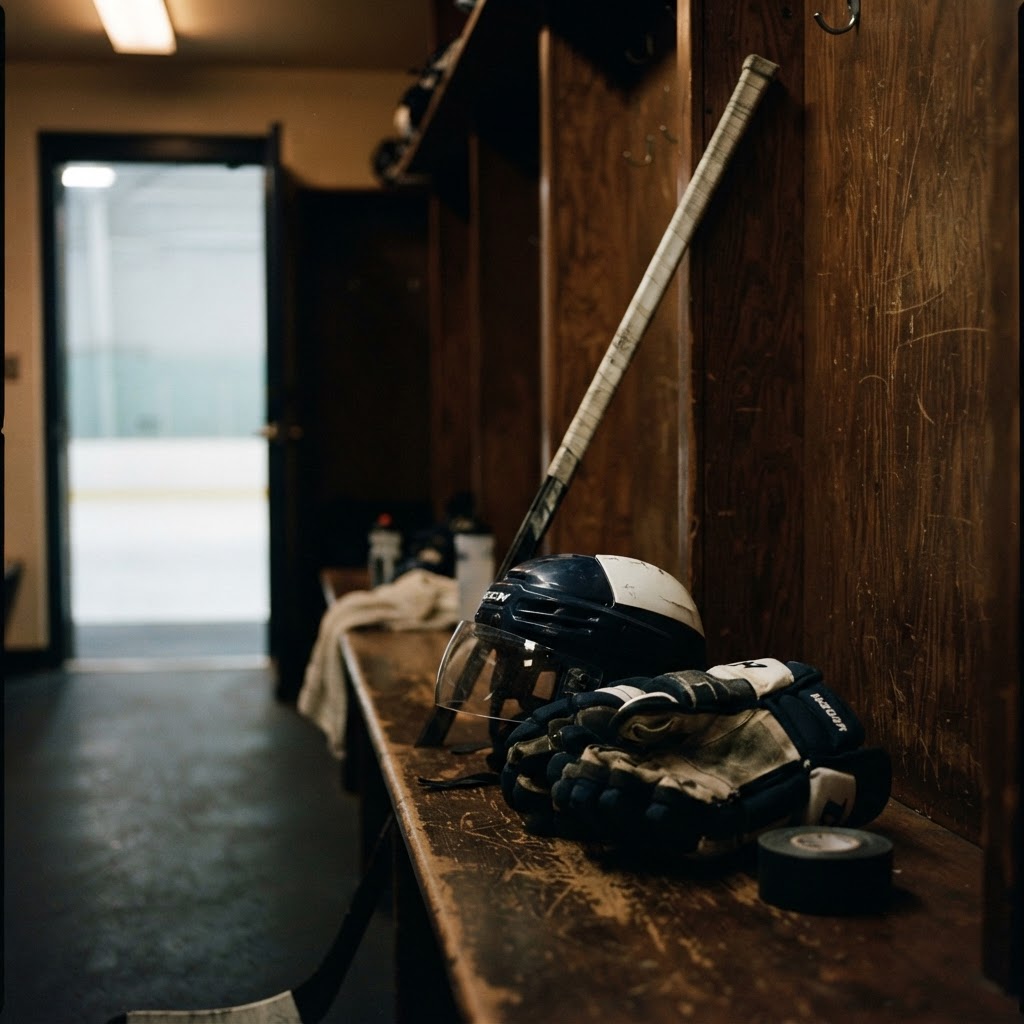
There's a photo circulating online — you've probably seen something like it — of a girl, maybe nine years old, fully geared up in a dressing room that clearly wasn't built with her in mind. Tape on her stick. Helmet a size too big. Eyes completely locked in. She doesn't look like she's waiting for anyone's approval. She looks like she's already there.
That image is the entire story of women's hockey in one frame.
The game didn't come to them. They came to the game — through the cold, through the skepticism, through the arenas that didn't have separate changing rooms, through the teams that didn't exist until someone decided to build one from scratch. Women's hockey is one of the most quietly defiant things happening in sports right now, and most people are still sleeping on it.
The Dressing Room They Weren't Supposed to Be In
For decades, the unofficial message was clear: this space isn't for you. Not explicitly. Nobody was standing at the gate with a sign. But it was in the way rink schedules were built, in the way ice time was allocated, in the way minor hockey budgets got divided. The boys got the primetime slots. The girls got the 6 a.m. Sunday slots and were supposed to be grateful.
Some of them were. And then they went out and absolutely cooked.
The dressing room in women's hockey carries a different kind of weight. It had to be claimed — not inherited. There's a generation of players who suited up in storage closets, in hallways, in bathrooms with one working stall. They didn't complain about it the way it deserved to be complained about. They just got dressed and went to work. That culture — tough, unsentimental, zero tolerance for excuses — is baked into the foundation of the women's game.
You can feel it when you watch. There's a physical intensity and a technical precision in the elite women's game that is genuinely difficult to explain to people who haven't seen it live. The pace is different from the NHL, yes. But the hockey is real hockey. Reads, edges, positioning, compete level. All of it.
What the PWHL Actually Means
The Professional Women's Hockey League launched and immediately did something that had eluded previous attempts at a professional women's league in North America: it got people to show up.
Not just show up — lose their minds. Toronto's Scotiabank Arena packed out. Montreal crowds that brought genuine noise. Boston, Ottawa, Minnesota, New York — arenas with real atmosphere, real passion, real hockey culture building in real time.
This matters more than a press release ever could. For years, the argument against investing in professional women's hockey was a circular one: not enough fans to justify the investment, not enough investment to build the fanbase. The PWHL cracked that cycle not by solving it theoretically but by just doing the thing. Put good hockey in front of people. Make it accessible. Let the game speak.
And the game spoke.
What the PWHL represents beyond the box scores is legitimacy — not the kind that gets handed down from above, but the kind that gets built on the ice in front of 10,000 people who drove through a February snowstorm because they wanted to be there. That's a different kind of legitimate. That's the real kind.
The Players Who Carried the Game When Nobody Was Watching
Before the sold-out arenas, there were years — decades — of players who competed at the highest level for almost nothing. Not nothing in terms of effort or meaning or love for the game, but nothing in terms of financial support, media coverage, or cultural recognition.
Marie-Philip Poulin has been doing things on a hockey rink that would make any era of player stop and watch. Hilary Knight has been one of the most compelling power forwards in the game for fifteen years. Sarah Nurse redefined what an Olympic points record could look like. These are not niche athletes. These are world-class competitors operating at a level that demands acknowledgment.
But acknowledgment came slowly, and when it did, it was often filtered through the lens of novelty — *look at these women playing hockey* — rather than the lens of excellence. That's changing. Not fast enough. But it's changing.
The players who came before the cameras and the leagues and the sellout crowds built the culture that makes those things possible. They played in front of empty arenas and didn't stop caring about the game. They took shifts in international tournaments that the hockey world barely covered and still left everything on the ice. That's not a footnote. That's the whole story.
The Youth Game Is Where the Real Growth Lives
Forget the professional level for a second and look at what's happening at the grassroots.
Girls' hockey registration numbers have been climbing for years across North America. In markets where it barely existed a decade ago — parts of the American South, Western Europe, non-traditional hockey countries — women's and girls' programs are starting up, finding ice time, building something from almost nothing.
The kids showing up to learn to skate now are growing up in a completely different environment than the generation before them. They have players to watch. They have role models who look like them wearing real uniforms and playing in real arenas. That feedback loop — see it, believe it, become it — is the engine of every sport's growth. Women's hockey finally has it running.
Coaches at the minor hockey level will tell you privately that the girls' programs are some of the most coachable, technically committed players they work with. There's a theory about that: when you have to fight harder for access to something, you tend to take less of it for granted. The work ethic in girls' hockey has a different texture to it. A different hunger.
Coaches, Refs, and the Infrastructure Being Built Right Now
The playing side gets most of the attention, but the infrastructure around it — coaches, officials, administrators — is equally important and equally underrepresented.
Women coaching women's hockey at every level is a given and should be celebrated. But women coaching men's or boys' hockey is still treated like a novelty act, and that's a failure of imagination by the hockey establishment. Coaching is coaching. Systems are systems. Reading a play doesn't require a Y chromosome.
There are women in officiating who are working their way through systems that were not designed to support them. There are women running minor hockey associations, managing rinks, building programs from administrative roles that usually go unnoticed until something breaks. The game's infrastructure is being quietly rebuilt with more people in it, and that's making it stronger.
This isn't about gender politics. This is about not leaving capable people on the outside of a sport that needs them. Every coach who knows the game and can communicate it well is a resource. Every official who understands the rules and has the presence to enforce them is a resource. The idea that those qualities belong to one demographic is genuinely bad hockey thinking.
What the Culture Looks Like from Here
Women's hockey culture is its own thing. It borrows from the broader hockey world — the dressing room rituals, the superstitions, the tape jobs, the brutal honesty of a good line change — but it's also built something distinct. A culture where the grind is acknowledged. Where the history of fighting for ice time is passed down. Where the players know what it cost to get here.
The fans are building something real too. The PWHL crowds aren't showing up because they were told to. They're showing up because they found something worth caring about. That's not manufactured. You can't manufacture the way a crowd reacts to a Poulin goal in overtime. That's just hockey doing what hockey does to people.
The women who play this game never needed anyone's permission. They needed ice. They needed each other. They needed enough people to eventually look up and pay attention.
They've been out there the whole time.
From the Collection
The game was never just for one kind of player. The Hard Around collection is built for anyone who loves hockey without condition — shop now at /product/472152300
Explore the drop →