
Nobody Talks to the Goalie Before a Game. That's Not an Accident.
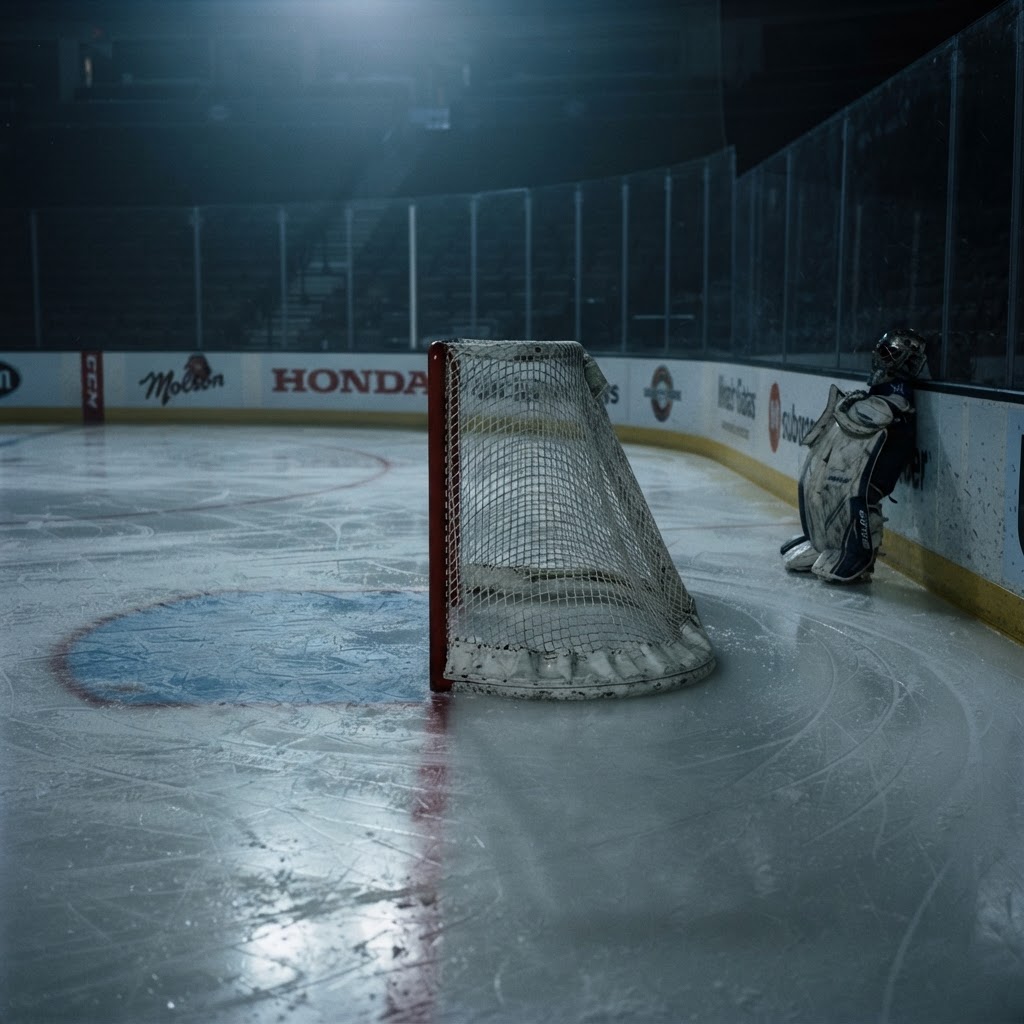
There's an unwritten rule in every dressing room from Tier 1 AAA down to Thursday night beer league: you don't mess with the goalie before a game. Not in a superstitious way — well, partly in a superstitious way — but mostly because the goalie is somewhere else entirely. Physically present. Mentally, already in the crease.
The rest of the team is chirping, taping sticks, arguing about last week's game-winning goal that somehow everyone scored. The goalie is sitting in the corner with their eyes either closed or fixed on a patch of wall that holds no particular meaning to anyone else in the room. They're not being antisocial. They're not being weird. They're building something. And if you knock it down by asking them to settle a debate about whose fault that third-period goal was, you will feel the weight of that decision the next time a breakaway beats them clean.
Goalies are a different organism. Everyone in hockey knows this. Most people just don't know why.
The Position Makes You This Way
Consider the actual job description: stand in a six-by-four foot net. Watch ten other players skate at you. Be the last line of defence every single time. Get scored on — because you will get scored on — and then reset. Immediately. With everyone watching.
No other position in team sports carries that specific kind of psychological weight. A defenceman pinches, gets caught, and the winger has to cover. Accountability is diffused across the lineup. But when the goalie gets beaten, there's no diffusion. The red light goes on. The other team celebrates. And the goalie has to fish the puck out of their own net, skate back to the blue paint, and do it all again like nothing happened.
This requires a particular brand of mental wiring that most people simply don't have and can't develop. Goalies either find it naturally — the ability to compartmentalize failure in real time — or they burn out by bantam. The ones who stick around are the ones who figured out that the only way to survive the position is to treat each shot as a standalone event. No memory. No accumulation. Just the next shot.
That mentality bleeds into everything.
The Ritual Is the Point
Ask any goalie about their pre-game routine and you'll get either a twenty-minute answer or a look that says they're not telling you anything because telling you would break it. Both responses reveal the same truth: the routine isn't preparation, it's identity.
The specific rituals vary wildly. Some goalies tap every post exactly twice before warmup. Some have a particular sequence for putting equipment on that hasn't changed since they were twelve years old — left pad before right, blocker before glove, helmet last, always last. Some need forty-five minutes of silence before they can even look at their gear. Some need music that would get you escorted out of most public spaces. Some need bad music, specifically. One guy I played with in a beer league years back needed to listen to a mid-2000s country song that he was deeply embarrassed about and would only admit to under direct questioning after multiple post-game beers.
None of this is rational. All of it is essential. Because the ritual creates a threshold. On one side: regular life, regular problems, regular noise. On the other side: the game, which requires total presence. The ritual is the door. And once you've crossed it, you can't be called back.
This is why you don't talk to the goalie. You're not interrupting a person. You're interrupting a process.
The Loneliness Is Built Into It
Here's something nobody really talks about: goaltending is the loneliest position in a team sport. Not lonely in a sad way — just structurally, architecturally lonely.
During practice, the goalie faces shot after shot while the rest of the team runs drills at the other end. During games, the goalie spends long stretches watching play develop far away, managing their own focus while their teammates battle for pucks in corners. On the bench between periods, everyone else is processing together — the shift that went wrong, the forecheck that opened up — but the goalie's experience of the same game is so different that they might as well have been watching from the stands.
The goalie sees everything. They see the defensive breakdowns before the forwards do. They see the winger who isn't backchecking. They see the D-pair that's been caught pinching all night. And they absorb it. That's the job — absorb what comes, deal with it, don't make it anyone else's problem.
Over time this creates a certain self-containment that becomes personality. Former goalies carry it with them even years after they've hung up the pads. There's a composure there, a habit of watching before speaking, a comfort with their own company that most people find either magnetic or slightly unnerving depending on the context.
The Relationship With the Team Is Its Own Thing
Despite the silence and the pre-game isolation, the goalie holds a particular social gravity in the dressing room. It's not the same as the captain's gravity — it's quieter, stranger. More like the presence of a specific kind of weather.
Everybody on the team has a relationship with the goalie that involves some degree of debt. You turned the puck over in your own zone and the goalie bailed you out. You took a bad penalty and the goalie killed it. You had a bad game and the goalie had a better one and held it together while you found your legs. This happens over and over across a season until the debt is just ambient, understood, unspoken.
In return, the team develops this protective instinct around the goalie that doesn't exist for any other position. You clear the crease differently when it's your netminder getting buried under bodies. You change the way you talk about a bad goal when the goalie is still in the room. There's a loyalty that runs deeper than the usual team loyalty — partly superstition, partly genuine care, partly a recognition that the goalie carries something the rest of the team never has to.
In beer league, this plays out in the most human way possible. The goalie is often the only reason a bad team stays competitive. And they know it. And the team knows it. So you buy the goalie their first beer without being asked, every time, without discussion. It's just the law.
What Happens When the Game Ends
The switch doesn't flip off cleanly. This is the part that non-goalies underestimate.
After a win, the goalie comes back into themselves gradually — you can almost watch it happen, the slow return to normal social frequency, the chirping resuming, the gear coming off piece by piece. After a bad loss, or a game where they got lit up, that return takes longer. Sometimes it takes a couple of beers and a full debrief with themselves that happens entirely in private, on the drive home, replaying every goal in a way nobody else on the team ever will.
The save percentage doesn't capture this. The stats don't capture this. Two goals against might represent a brilliant performance that kept the team alive. Four goals against might have been the best game of the goalie's season against an opponent that had no business being stopped. Context is everything and the goalie lives inside the context more than anyone.
What you eventually understand, after playing with enough goalies over enough years, is that the habits and the rituals and the silence and the stare — it's not an act. It's not mystique for mystique's sake. It's a coping mechanism that became a lifestyle that became an identity. The goalie built a way of moving through the world that lets them stand in that crease, absorb the pressure, and come back next game and do it all over again.
That's not strange. That's remarkable.
Leave them alone before the game. Buy them a beer after. And try to keep the shots from the high slot, if you can manage it.
From the Collection
The Hard Around collection is built for people who understand the game from the inside. Browse the full lineup at /product/472163319.
Explore the drop →