
You're Not Just a Player. You're a Character.
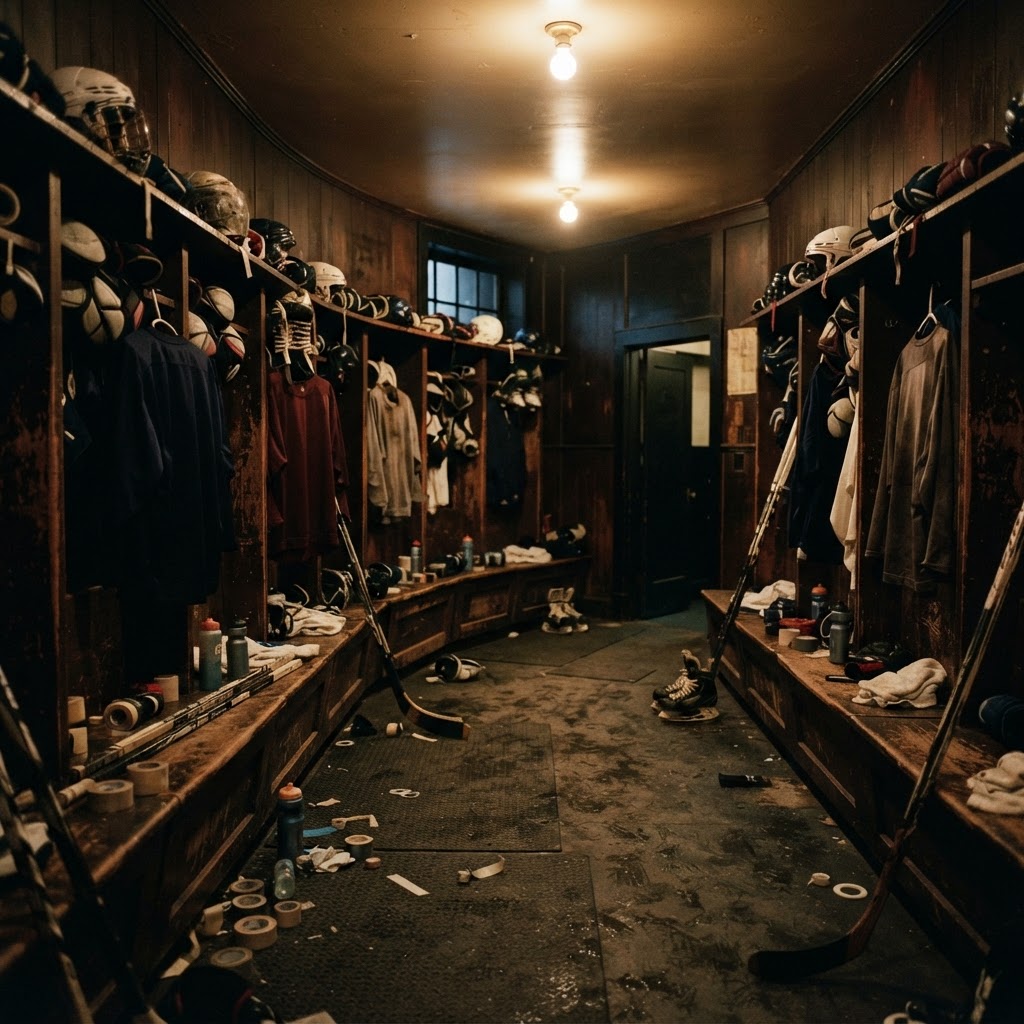
There's a theory that if you stripped the jerseys off every recreational hockey team in North America and shuffled them into one giant room, you'd have about twelve different people. Not twelve hundred. Twelve. The same twelve, over and over, wearing different faces.
You've played with all of them. Maybe you are one of them. The guy who shows up twenty minutes late and blames traffic. The guy who's been playing since he was four and acts like it. The guy who hasn't stopped talking since he laced up and shows no signs of slowing down. These aren't stereotypes — they're load-bearing walls. Every team needs them to function.
This isn't about mocking the characters. It's about understanding them. Because when you know who's who, you understand why teams work — and why sometimes they completely fall apart.
The Guy Who Takes It Way Too Seriously
He's the one who watches tape. Recreational hockey tape. He tracks his plus/minus in a division where half the guys are playing after a full shift at work and two beers in the parking lot. He's talked to the coach — voluntarily — about systems. He owns multiple pairs of sticks for different situations. He probably has an opinion about your sticks too.
Here's the thing about this guy: you need him. He's annoying in the way that a smoke alarm is annoying. Nobody likes it going off, but you're glad it's there. He cares about the outcome when nobody else does, and somewhere in the third period of a meaningless game in a meaningless season, that actually matters. He's the one who keeps everyone from completely phoning it in.
The danger is when he tips over into full obsession — the post-game analysis, the pointed comments about defensive coverage, the look he gives you when you pinch at the wrong time. That's when he stops being an asset and starts being a problem. The best version of this guy knows when to turn it off. Most of them don't.
The Chirper
Every dressing room has a mouth, and this is his natural habitat. He's been chirping since before he could skate, and at this point it's less a choice than a reflex. The ref makes a call? Chirped. Someone misses a wide-open net? Chirped. His own linemate makes a bad pass? Definitely chirped. He's an equal opportunity offender.
What separates a great chirper from a bad one is timing and self-awareness. The elite version of this guy can take it as hard as he gives it. He'll go after you relentlessly, but the second you fire one back that lands, he's laughing harder than anyone. That's the guy you want. He keeps the dressing room loose, defuses tension before it builds, and has a gift for puncturing egos that desperately need puncturing.
The lesser version is just mean, or worse — thin-skinned. He dishes without receiving, and eventually the room turns on him without him ever understanding why. Chirping is a culture, not a personality flaw. You have to actually love the game and the people in it to do it right.
The Ringer
He skated at a level you'll never reach. Maybe it was junior. Maybe it was college. Maybe — and this is rare but it happens — it was something higher than that. Whatever it was, he's here now, in your Tuesday night C division, and for reasons you've never fully understood, he seems completely at peace with that.
The ringer operates at a different speed than everyone else. Not just physically — he processes the game faster, reads plays earlier, and makes decisions before most guys have even recognized the situation. Watching him is equal parts inspiring and humbling. You'll catch a pass off a play you didn't think you'd get to and realize he put it there for you on purpose, three seconds before you were open.
The complicated part is what it does to team dynamics. If he's gracious about it — and the good ones are — he makes everyone better and asks for nothing. If he's not, if he carries the weight of his former glory into every shift, it poisons the well. There's a version of the ringer who you'd skate through a wall for, and a version who you're quietly relieved got called up to A division. The difference is entirely about character, not ability.
The Benchwarmer Who Knows Everything
This guy has the most detailed understanding of hockey strategy of anyone on the team. He can break down zone entries, explain why the forecheck isn't working, and identify the defensive breakdowns in real time. He says all of this from the bench, where he has been for most of the game.
Here's the thing — he's usually right. That's the part that makes it complicated. You can't dismiss the analysis because the analysis is often accurate. You just can't shake the feeling that someone who's actually on the ice doesn't have the luxury of that clarity. He's watching it like film while everyone else is living it.
What this guy actually brings, when he's at his best, is institutional memory and perspective. He's seen the team in every situation and he remembers all of it. He knows what worked against this opponent last time, who tends to get tired in the third, where the breakdowns happen. He's the team's resident historian. Use him accordingly.
The Glue Guy
You won't notice him the way you notice the chirper or the ringer. He doesn't make speeches, he doesn't take up a lot of air, and after the game he doesn't dominate the debrief. But something happens when he's not there. The room feels different. Slightly off. You can't explain it and nobody wants to say it out loud, but everyone feels it.
This is the guy who makes sure the quiet new guy feels like he belongs. Who diffuses the tension between the serious guy and the chirper before it becomes a thing. Who shows up when the team is short and doesn't make a big deal about it. He's not selfless in a performative way — he genuinely doesn't need credit, which is what makes him valuable.
Every functional team has one. Not every team knows who theirs is, which is actually fine. The moment a glue guy starts needing recognition for holding things together, he's stopped being a glue guy. It's the invisibility that defines the role.
The Guy Who's Been Here Forever
This team is his team. Has been for fifteen years, maybe longer. He was here before the good coach, before the bad coach, before the turnover that rebuilt the roster. He remembers when the rink smelled different and the locker room had better hooks. He has opinions about which ice time slots are worth fighting for and which refs are worth arguing with.
New guys read him carefully, and they should. He holds the culture. The unwritten rules of this particular room — what's acceptable, what isn't, how hard you're supposed to push, where the line is on chirping — all of that lives in him. Teams don't get that from a rulebook. They get it from watching how the old guard handles things and following suit.
What he has to watch for is calcification. There's a version of this role that becomes gatekeeping — an unconscious resistance to anything new, any shift in how things have always been done. The best version of this guy holds the culture without choking it. He knows the difference between tradition worth keeping and habit worth breaking. That's a harder distinction than it sounds.
Why the Cast Doesn't Change
The reason these personalities show up on every team, in every rink, in every city, isn't coincidence. It's because hockey demands them. The sport is high-pressure, physically brutal, emotionally invested, and played in close quarters. It creates conditions where certain personalities aren't just common — they're necessary.
You need someone who cares too much to keep everyone honest. You need someone who doesn't care enough to keep everyone sane. You need someone who's been around long enough to remember what the team is actually about. You need someone who holds it all together without needing anyone to notice.
The cast doesn't change because the game doesn't change. The rinks get newer, the equipment gets lighter, the schedules get more complicated — but at the end of the night, you're still twelve guys in a room trying to figure out how to be a team. Same as it ever was.
From the Collection
The Hard Around collection is built for people who know exactly which character they are — and wear it without apology. Browse at /product/472053912.
Explore the drop →