
The Injury You Didn't Report and the Shift You Took Anyway
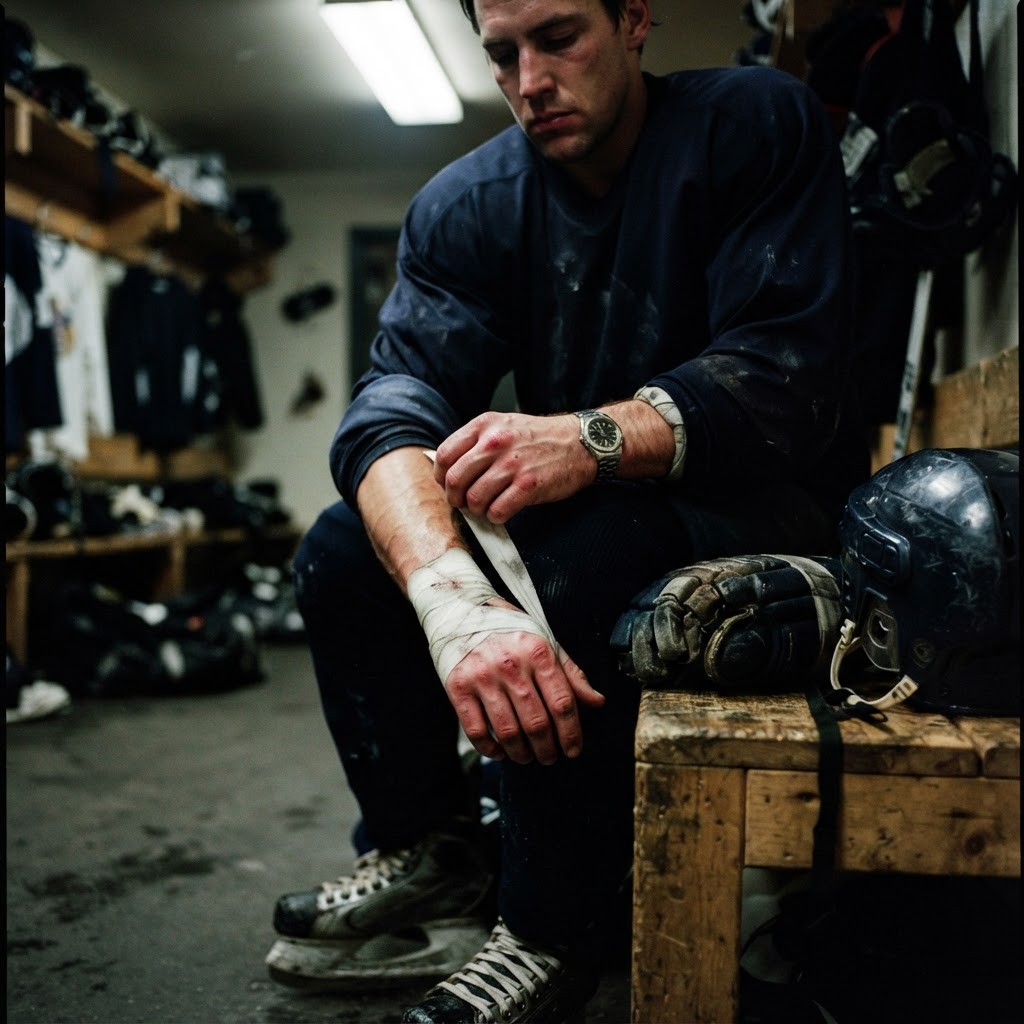
There's a moment every hockey player knows. You take a hit — or maybe you just catch an edge wrong, or a puck finds the one spot your gear doesn't cover — and for a second you don't move. You do an inventory. Fingers. Wrist. Can I breathe? Good. Can I skate? Probably.
You get up. You finish the shift.
Nobody made you. Nobody asked. You just did it because that's what you do, and because somewhere along the way you learned that hockey players don't measure pain the way other people do. You measure it against the game. Against your team. Against the stubborn, stupid, beautiful fact that you came here to play.
This isn't about toughness as a performance. It's about something quieter than that — the private relationship every player has with their own body when the game is asking more than feels reasonable.
The Body Keeps the Score, But So Does the Ice
Ask any player who's been in the game long enough and they'll give you the list without hesitation. The separated shoulder they played through for six weeks. The skate blade that opened up a shin. The broken finger they buddy-taped to the next one and forgot about until the season ended. The bruised ribs they stopped thinking about by the third period because the adrenaline was doing something the ibuprofen couldn't.
These aren't war stories told for sympathy. They're offered the way veterans trade coordinates — matter-of-factly, almost fondly. There's a taxonomy of hockey injuries that players understand viscerally: the ones that stop you, the ones that slow you, and the ones you just absorb and carry forward like extra weight on the skate.
The ice is honest that way. It doesn't care how hurt you are. It keeps going. You either keep up or you don't.
And most players — from the NHL guy grinding through the playoffs to the beer leaguer who's got work at 7am — find a way to keep up. Not because they're invincible. Because the alternative is sitting in the stands, and that's a different kind of pain entirely.
What a Bruise Actually Costs You
The physical stuff is obvious. What doesn't get talked about enough is what an injury costs you in the hours and days around it.
It's the way you sleep — or don't — because there's no position that doesn't remind you the puck found your thigh at full velocity. It's the shower the next morning where you catch yourself in the mirror and do a slow pan across the damage like you're appraising real estate. Deep purple. Yellow at the edges. A little green that wasn't there yesterday. You prod it once, make a sound that's somewhere between a laugh and a grimace, and go make coffee.
It's the way you walk into work and someone asks if you're limping and you say no and then immediately try to walk differently. It's the mental negotiation that starts around Wednesday when game night is Thursday — the constant check-in with your body, assessing the situation like a coach deciding whether to dress a player. Is it better? Is it worse? Can I get through warmup without tipping anyone off?
Most of the time the answer is yes. Sometimes the answer is barely, and you play anyway. Occasionally — not often — the answer is no, and you make the call that costs you more emotionally than anything your body is doing.
The Return Nobody Celebrates
There are two kinds of comebacks in hockey. The first is the dramatic one — the guy who had surgery, did the rehab, came back better. That one gets the handshakes in the dressing room, the comments on the group chat, maybe a mention from the coach.
The second kind is invisible. It's the player who missed two weeks with something they described as
From the Collection
The Hard Around Heavy Tee is built for people who know what it costs to show up. Available now at /product/472184482
Explore the drop →