
Where the Ice Ends and the Obsession Begins: Hockey in the Cities That Weren't Supposed to Care
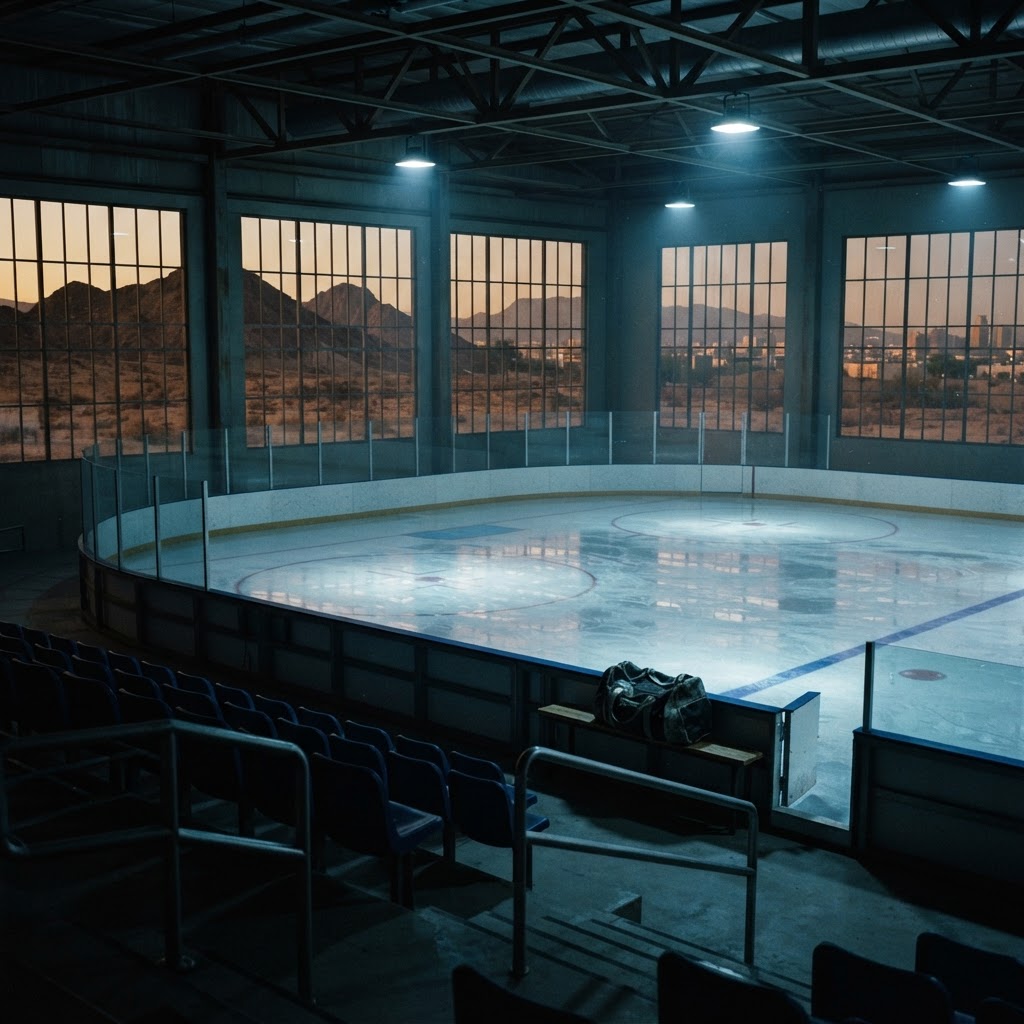
There's a rink in the desert that smells exactly like every rink you've ever been in. Same ammonia bite, same wet concrete undertone, same faint ghost of tape and rubber. You walk in off a street where it's thirty-eight degrees and bone dry, and then the doors close behind you and you're somewhere else entirely. You're in the game.
Hockey doesn't ask permission. That's the thing people who didn't grow up with it don't understand, and the thing people who did take for granted. It just finds a way in. Through a kid who caught a playoff game on cable and couldn't shake it. Through a relocated family who needed something familiar in an unfamiliar city. Through a university student who laced up for the first time at twenty-two and never looked back. The sport has been quietly colonizing unexpected places for decades, and the communities it leaves behind are some of the most honest, raw, and committed hockey culture you'll find anywhere.
This isn't a story about the NHL expanding into sunbelt markets. That's a different conversation — boardrooms, television deals, franchise valuations. This is about the rinks that exist despite all of that. The ones that don't need a major league team to justify themselves. The ones where the passion is local, personal, and completely disproportionate to the number of people who know the team exists.
The Rink Nobody Was Supposed to Build
In cities where hockey isn't the default sport, the rink itself is often the first miracle. Someone had to decide it was worth doing. Someone had to look at a population with no hockey tradition and say, *they'll come*. And in most cases, against all reasonable expectation, they were right.
These facilities don't have the bones of a northern Canadian barn — the scarred wooden boards, the low rafters, the weight of a hundred winters of minor hockey pressing down on the dressing rooms. They're often newer, sharper, built inside retrofitted warehouses or purpose-constructed recreation complexes that also house yoga studios and indoor turf fields. The ice is good. Sometimes the ice is excellent. What they lack in history, some of them make up for in function.
But here's what's interesting: the culture forms anyway. It forms fast, and it forms hard. Because when you're the only rink for two hundred kilometres, every skater, every hockey parent, every beer leaguer and figure skater and ringette club shares the same building. The community that develops is compressed and intense in a way that larger markets rarely see. Everyone knows everyone. The politics are thick. The loyalty is fierce.
The Transplants Who Carried the Culture With Them
If you want to understand why hockey exists in places it shouldn't, follow the transplants. The Calgary family that moved to Texas for work and couldn't imagine raising their kids without the game. The Quebecois engineer who ended up in rural Australia and started calling rinks in the nearest city until someone picked up. The Finnish exchange student who came for a semester and stayed for a decade because the local club needed a defenceman who could actually skate.
These people don't just bring their skills. They bring the full weight of the culture — how a dressing room is supposed to sound, how you pass the puck to the right guy even when he hasn't earned it yet, what it means to be the last one off the ice after a loss. They arrive in places where the game is young and fragile, and they become its spine.
What they discover, often, is that the hunger in these new markets is real. The people who came to hockey late, who found it without being handed it by their parents or their geography, tend to hold onto it differently. There's a convert's intensity to it. They've thought about why the game matters in a way that lifelong players sometimes haven't. They chose it consciously, and that choice means something.
The Supporters Who Show Up Anyway
In a hockey market that doesn't exist on paper, the stands look different. There's no casual fan, no seat-filler, no corporate box crowd who's half watching the game and half watching their phones. The people in the building are there because they want to be there, because they made a real decision to come.
Some of the most vocal, most knowledgeable hockey crowds in the world are in markets that would embarrass a sports business analyst. Semi-pro teams in mid-sized southern cities drawing a few hundred people a night who know every player's name, who track the stats, who have opinions about line combinations that would hold up in any press box. Inline hockey leagues in subtropical cities where the fans treat recreational games with the gravity of a playoff series.
You see it at the junior level too — the local club in a non-traditional market where the entire extended community shows up. Families who aren't hockey families but became hockey families because their kid caught the bug. Employers who give staff flexible hours on game nights. Teachers who follow their students' seasons. The sport builds scaffolding around itself wherever it lands, and that scaffolding holds.
What the Game Teaches You When Nobody's Watching
One of the underappreciated things about hockey in niche markets is how much the players have to do for themselves. In traditional markets, the infrastructure is there — the coaches, the equipment suppliers, the networks, the older players who naturally mentor the younger ones. In emerging markets, you figure it out as you go.
This produces players who understand the game differently. They've had to think about it, ask questions, seek out knowledge that was never handed to them. They've driven hours for a game, slept in strange places, borrowed gear, played hurt because there wasn't a backup. They have the resourcefulness that hardship produces — not the mythologized hardship of the old Canadian winter, but a different kind. The hardship of loving something that your environment wasn't designed to support.
The dressing room culture in these places has its own texture too. It's a mix of backgrounds and hockey histories that you'd rarely find in a single room in a traditional market. The guy who grew up in Winnipeg sits next to the guy who first put on skates at thirty. The woman whose dad played in a European league sits next to the woman who learned the game from YouTube videos and sheer determination. It creates a culture of teaching, of patience, of explanation that benefits everyone.
The Ice as Common Ground
There's a political and social dimension to hockey in unexpected places that rarely gets talked about. When the game takes root in a diverse city, in a non-traditional country, in a community that doesn't look like the traditional face of the sport, it does something important: it forces the culture to evolve.
Hockey's history with inclusivity is complicated and ongoing. But in the niche markets, on the fringes, there's often less baggage. The newcomers aren't carrying sixty years of entrenched culture into the rink with them. They're building something from scratch, and what they build tends to reflect who they are — which is often more varied, more welcoming, more open to reinvention than the traditional strongholds of the game.
This doesn't mean these communities are perfect. They have their own dynamics, their own hierarchies, their own moments of getting it wrong. But there's something genuinely different about a hockey community that formed around shared love rather than shared inheritance. The game means something slightly different when you had to go looking for it.
The Rink That Holds the City Together
Ask anyone who has been part of a hockey community in an unexpected place what the rink means to them, and you'll hear the same thing in different words. It's the place that makes sense. Everything outside might be disorienting — the climate, the culture, the unfamiliarity of being somewhere new — but inside the rink, the rules are the same. The ice is the same. The game is the game.
That's what hockey carries with it when it travels. Not just the rules and the equipment and the strategy, but a whole way of being together. A social language. A set of values about hard work and loyalty and showing up when it matters. A culture of knowing your role and doing it without needing to be celebrated for it.
In the cities that weren't supposed to care, people care. They care deeply, specifically, and permanently. The rink becomes the anchor of something that didn't exist before. The game finds ground everywhere it's planted, and it always grows the same way — upward, toward the rafters, toward the crowd, toward the cold clean smell of ice that hits you before anything else does.
The sport never asked permission. It just showed up. And the people who needed it were already waiting.
From the Collection
The Hard Around Red Tee is for anyone who carries the game somewhere it didn't already exist. Available now at /product/472276833.
Explore the drop →