
The Chirp Is an Art Form. Most People Are Doing It Wrong.
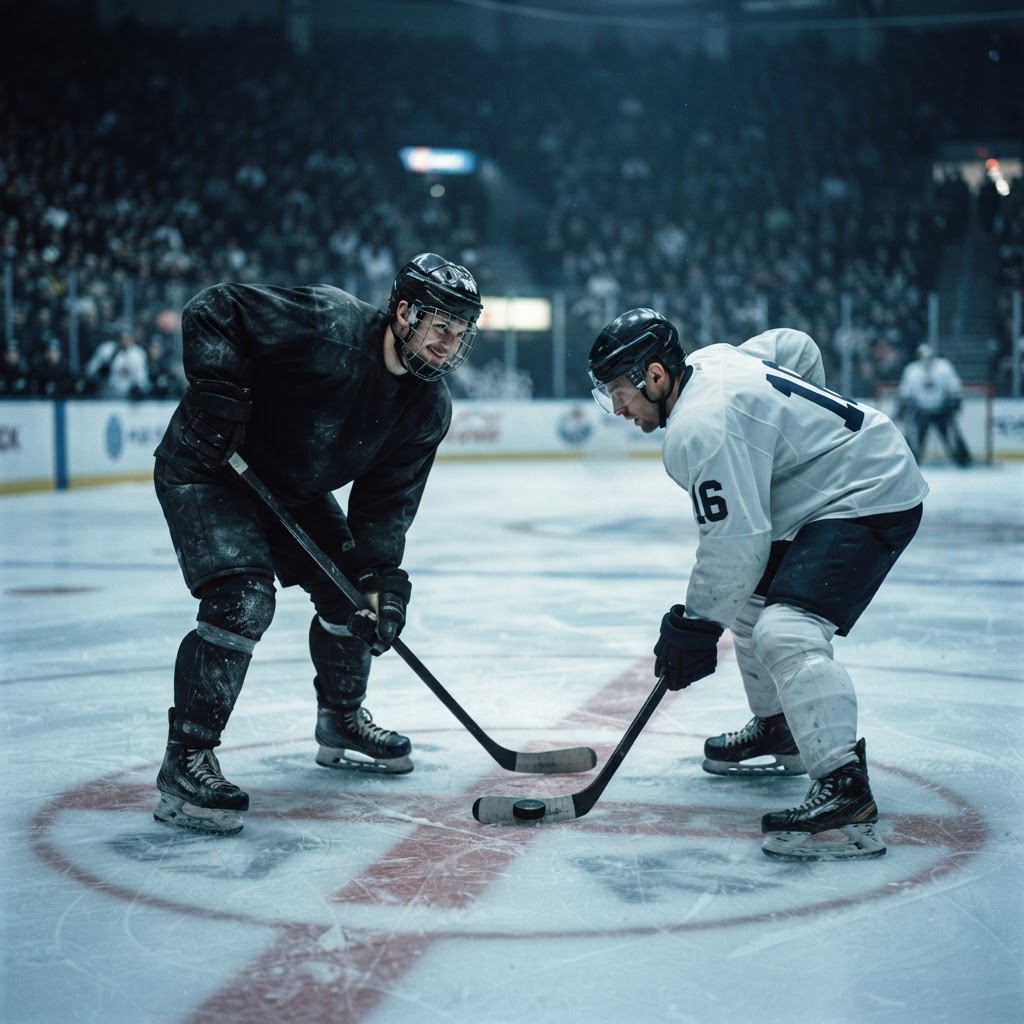
There's a moment in every hockey game — rec league, junior, beer league, whatever — where someone opens their mouth and the whole bench goes quiet for half a second. Not because something bad happened. Because something *perfect* happened. A chirp so clean, so precisely aimed, that even the guy who got hit with it has to skate away fighting a smirk.
That moment is not an accident. That's craft.
Chirping in hockey gets lumped in with goonery and cheap shots in the minds of people who don't understand the game. But anyone who's actually played knows the difference. A good chirp has nothing to do with cruelty. It has everything to do with timing, awareness, and a certain kind of fearlessness that the game itself demands. You've got to be willing to say it out loud, in front of everyone, and then go back to playing hockey — ideally better than before.
Know Your Target
The first rule of the chirp is that it's never random. Spraying garbage at anyone within earshot isn't chirping — that's just noise. The guys who are actually good at it have already done their homework by the second period. They've clocked who's having a bad night. They've noticed the guy who gets in his own head after a turnover, the defenseman who's been getting beat wide and knows it, the goalie who let in a soft one and hasn't shaken it yet.
The great chirpers in hockey history — and every dressing room has a couple — were students of the game in a specific, slightly diabolical way. They didn't just read plays. They read people. They understood that the right four words at the right moment could do more damage than a clean hit into the boards. Not physical damage. *Mental* damage. Doubt. Hesitation. That half-second of lost focus that changes a shift.
In beer league this is both easier and more dangerous. Easier because you've been playing against the same twelve guys for six years and you know exactly where their soft spots are. More dangerous for the exact same reason.
Timing Is Everything
A chirp dropped at the wrong moment is just chirping into the void. The delivery window for a proper verbal jab is narrower than most people think. Right after a whistle, with enough distance that it feels effortless. Not when things are getting physical — that's when it becomes provocation rather than wit, and the line matters. Not when your team is down three goals in the third — that's not a chirp, that's desperation, and everyone knows it.
The best chirps land in moments of stillness. A face-off circle. A line change. That brief pause after a goal when the celebration is winding down and the other team is regrouping. You say your piece, then you skate to the bench like nothing happened. No staredown. No waiting for a reaction. The confidence of not needing to see it land is half of what makes it land.
There's a reason the enforcer types who tried to chirp usually weren't very good at it. They wanted the reaction too badly. Real chirping is almost indifferent. You said your thing. It's out there now. Whether it got to him is his problem.
What Makes a Chirp Actually Good
Specificity. That's the answer. Generic insults are garbage. "You suck" is not a chirp. It's filler. It says nothing about the guy you're saying it to, which means it bounces off without leaving a mark.
A good chirp references something *real* — something that just happened, something everyone on the ice already noticed, something the guy can't deny or argue with. That's the paralyzing part. When someone puts words to the thing you've been trying not to think about, you suddenly can't stop thinking about it.
"That's the third time he went to your backhand" is a chirp. "Nice hands" after someone fans on a shot is a chirp. Calling a guy by the wrong number and then apologizing because "you all kind of look the same out here" — that's a chirp. It's specific, it's quick, and it's got just enough plausible deniability to keep things civil.
The plausible deniability thing matters more than people give it credit for. The chirps that cross into genuinely ugly territory — personal stuff, family stuff, anything that has nothing to do with hockey — aren't chirps. They're just being a bad person with skates on. The best ones live right on the line of compliment and insult. The receiver isn't sure which way to take it, and that confusion is exactly where you want him.
The Chirp Economy of the Dressing Room
Here's something that gets overlooked: chirping doesn't stop at the final buzzer. The dressing room after a game is its own arena, with its own rules and its own greatest hits. And here the dynamics shift completely — now you're chirping *teammates*, which requires a different calibration entirely.
Dressing room chirps are about hierarchy and affection at the same time. The guys who get chirped the most are usually the guys who are most embedded in the group. Getting ignored in the dressing room is a far worse sign than getting ripped on. When someone burns you in the room and everyone laughs, including you, that's belonging. That's the weird social math of hockey culture.
The unwritten rule is that dressing room chirps punch at failure and ego in equal measure. The guy who had a hat trick gets it just as bad as the guy who blew a two-on-one. Nobody gets spared, nobody gets to take themselves too seriously, and the moment someone gets genuinely offended is the moment the whole thing recalibrates and finds a new target.
Veterans understand this. Rookies learn it fast or learn it the hard way.
When the Chirp Comes Back at You
This is where the real character is revealed. Anyone can dish. The measure of a player — at any level — is how they absorb a chirp that actually lands.
The wrong responses: going quiet, going hard, chirping back immediately with something dumb because you needed to respond and had nothing. All of these tell the other guy he got you. All of these are losses.
The right response is almost nothing. A small laugh. Skating away. Maybe, if you've got it in you, something short and self-aware that flips the whole thing over. The ability to take a verbal hit and not change your game is a skill. It's the same mental composure that lets a goalie shake off a bad goal or a sniper forget a missed breakaway.
Some of the best chirpers in beer league are the guys who've been absolutely roasted over the years and paid attention to what worked on them. They learned by losing the exchange. There's no better education.
The Unwritten Geneva Convention of the Chirp
Every rink has them. The things you don't say. Not because there's a rulebook but because it's understood — by anyone who actually grew up in hockey culture — that some lines turn a chirp into something else entirely.
You don't go at injuries. You don't involve people's kids or their family. You don't dig into stuff that has nothing to do with what's happening on the ice. You don't chirp a guy who's clearly in a dark place about something that has nothing to do with hockey. These aren't soft rules. They're the difference between being a guy who competes with his mouth open and being a guy who's just mean.
The best chirpers know this instinctively. They don't need to be told. They understand that the whole point of the thing — the reason chirping is part of hockey culture at all — is that it's a *game within the game*. It sharpens competition. It tests mental toughness. It creates stories that get retold for twenty years in arenas and parking lots and dressing rooms.
None of that works if it's actually cruel. The line isn't always perfectly clear. But the guys who are genuinely good at this — the ones who make whole benches lose it with a single line — they never go near it. They don't need to. They've got enough without it.
There's a craft to this. There always has been. And in a sport that's as physically demanding and mentally grinding as hockey, the verbal game has always been part of the full picture. The chirp is alive and it lives on every sheet of ice in this country. Treat it with the respect it deserves.
From the Collection
If you're going to chirp, at least look like you belong out there. The Hard Around collection was built for the kind of player who takes the game seriously and everything else loosely. Shop at hardaroundhockey.com/product/472286817
Explore the drop →