
the goalie doesn't warm up with the team and nobody questions it
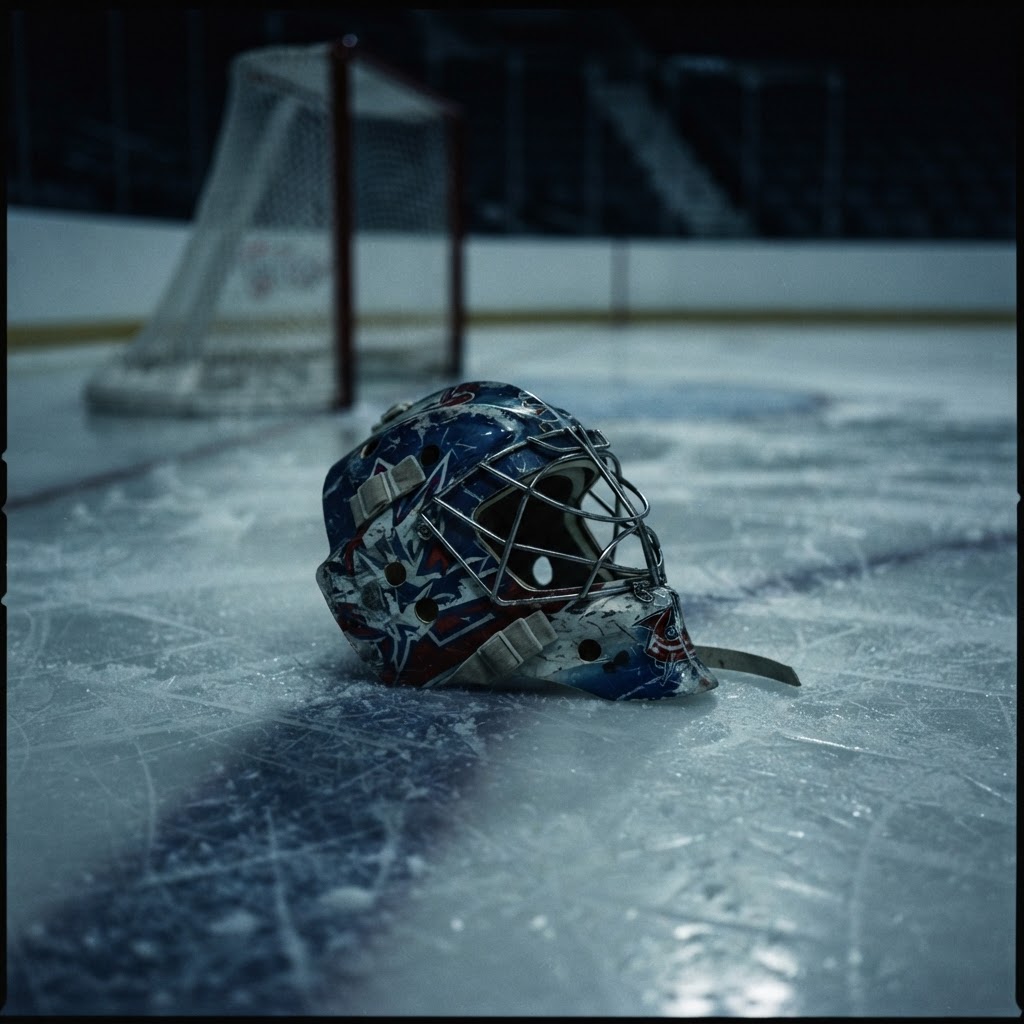
There's a moment at the start of every skate — doesn't matter if it's a Tuesday night beer league or a rep team practice — where the goalie peels off from the group and goes somewhere else entirely. Physically, maybe. Mentally, definitely. The rest of the team is doing laps, talking garbage, loosening up together. The goalie is in their own atmosphere. Always has been. Always will be.
Most players learn early not to take it personally. The goalie isn't being antisocial. They're not above the team. They just exist in a fundamentally different relationship with the game — with pressure, with failure, with the entire concept of a bad night — and that difference shapes everything about how they carry themselves, how they prepare, and how they process what happens on the ice.
This isn't a breakdown of goalie superstitions. You already know about those. This is about the deeper thing — the mentality underneath the mask, and why goalies are, without question, a different breed.
they are the only player for whom one mistake becomes the whole story
Every skater on the ice can have a rough shift and disappear into the next one. A turnover, a missed assignment, a bad line change — the game keeps moving, the team absorbs it, and by the next period it's mostly forgotten. The scoreboard doesn't track individual errors for forwards and defencemen. It tracks goals.
Goals against the goalie.
There is no position in team sports quite like it for accountability. You can play forty-five minutes of elite hockey — reading plays early, tracking pucks through traffic, making saves that don't even look hard because your positioning was perfect — and then one shot squeaks through at 11:43 of the third and suddenly that's the headline. That's what people remember. That's what gets replayed in your head at 2 a.m.
Goalies know this. They've always known this. And instead of breaking under the weight of it, the ones who last learn to build something around it. A kind of psychological armour that looks, from the outside, like aloofness or strangeness or ritual. But it's actually just self-preservation dressed up in habit.
the mask is doing more work than you think
There's a reason goalies started painting their masks the way they do. The early ones were plain fibreglass — functional, nothing more. Then somewhere along the line, the art crept in. Animals. Logos. Fire. Monsters. Eyes staring back at you from the crease.
That wasn't an aesthetic choice first. It was a psychological one.
When you put on a mask that looks like something other than your face, something shifts. Ask any goalie who plays seriously and they'll describe some version of a transformation — a character they slip into, a version of themselves that can absorb the chaos of a game without letting it reach the actual person underneath. The mask is a boundary. A threshold. Once it's on, the rules change.
This is why you don't knock on a goalie's mask without permission. Not before a game, not during warmup, not ever. It's not about the gear. It's about the ritual it represents. You're not touching equipment. You're interrupting something.
they practice getting beat, every single session
Here's something that sounds obvious but isn't: goalies are the only player who regularly, deliberately, repeatedly experience failure as part of the training process. Every drill where a shooter scores is, technically, a goalie getting beaten. And they do it hundreds of times a week in practice, without the luxury of taking a shift off mentally or coasting through a rep.
Skaters get to be wrong in practice and shake it off. Didn't win the battle on the boards? Run it again. Missed the net? Next rep. The repetition is about building the right habit. For the goalie, the repetition includes — requires — losing.
That changes how you handle failure. It has to. A goalie who falls apart mentally every time they're beaten in practice will never survive a real game. So they develop this thing — this almost clinical detachment from the outcome — that looks cold to everyone else but is actually just the only sustainable way to do the job. You get scored on. You reset. You go again. Over and over until it's just a fact, not a verdict.
It makes them handle in-game adversity differently than anyone else on the bench. They've been trained by the job itself to move on fast.
the crease is a kingdom with a population of one
Every goalie has a complicated relationship with their crease. It's their space in a way that no other player has a defined space — not really. The left wing has a zone, sure, but nobody stares daggers at an opponent who wanders through it. The goalie's crease is different. It's jurisdiction.
In minor hockey, you start to see it early. The eight-year-old who just started playing net already has strong opinions about who's allowed near the blue paint. By the time they're teenagers it's fully developed — an almost territorial instinct that the position seems to breed into people.
The smart teams learn to respect it. You want your goalie to feel ownership of that part of the ice because that ownership is part of the mentality that makes them effective. A goalie who feels like they control their crease plays with a different kind of authority. They communicate better. They fight for posts. They challenge angles instead of sitting back.
A goalie who's been undermined — by teammates crashing the crease without purpose, by coaches who second-guess their positioning publicly, by a culture that treats them as an afterthought — plays smaller. It's almost immediate, the effect.
they remember every save and every goal, in a way skaters simply don't
Ask a forward how many goals they scored last season. They'll probably know. Ask them about a specific goal they gave up with a bad read in November. They'll shrug. The game moves forward. That's how most players survive it.
Ask a goalie about a goal they gave up three years ago and watch what happens. They might describe the shooter's release point, the screen, the exact angle of the shot, where they were positioned, what they should have done differently. The detail is almost uncomfortable to witness. It's not healthy, probably. But it's real.
Goalies archive their failures in a way no other player does because their failures live on the scoreboard in a way no other player's do. And weirdly, they archive their big saves the same way. The breakaway they kicked out in overtime. The shot off the post that ricocheted away. The game where they kept the team alive long enough to get the win.
That memory isn't neurotic, even when it looks that way. It's the fuel. Goalies play their best when they have something to prove — to themselves, mostly. The memory of the bad goals is what makes the next save matter.
the rest of the team needs them more than they'll ever admit
Hockey is a team sport, obviously. Five skaters, one goalie. Except in practice, in the culture of most dressing rooms, the goalie is treated as something slightly separate — part of the team but not fully of it. Different drills, different timing, different pre-game prep. A lot of teams barely even acknowledge the goalie until they need a big stop.
And yet.
Watch what happens to a team's body language when the goalie is sharp. When they're making the saves they're supposed to make and stealing the ones they shouldn't. The whole bench lifts. Defencemen take risks they wouldn't otherwise take. Forwards stay aggressive instead of retreating into protection mode. A confident goalie changes the psychological math of the entire group, silently, from sixty feet away.
The reverse is just as true. A struggling goalie — not necessarily playing badly, just visibly uncertain — creates anxiety that spreads like a slow leak. Players start cheating back. The forecheck softens. The team starts playing not to lose instead of playing to win.
Goalies shape the culture of a team in ways that never show up in a stat line. They're the emotional foundation of the group whether anyone says so or not. The ones who understand that and take it seriously — who show up with the mask on and the head right and the crease owned — those are the goalies teams build around, even when they never score a single point.
That's the whole deal, really. They stand alone in the most literal sense. And somehow that isolation is exactly what makes them essential.
From the Collection
The Hard Around gear is built for people who understand the game from the inside. If any of this felt familiar, it probably fits. /product/480696532
Explore the drop →