
Every Dressing Room Has the Same Twelve Guys
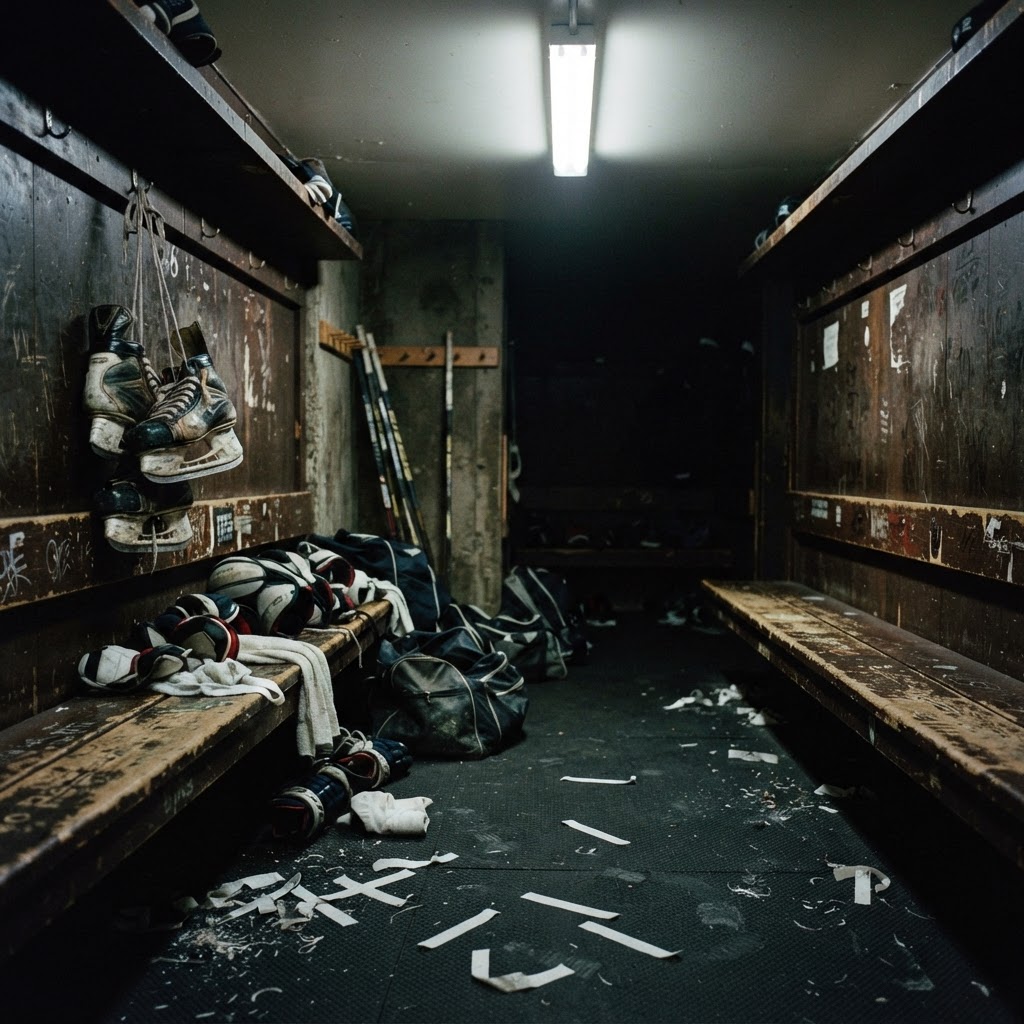
There's a specific kind of comfort that hits you the moment you pull open a dressing room door. It doesn't matter if it's a barn in northern Ontario with exposed pipes running along the ceiling, a suburban rec complex in New Jersey with fluorescent lighting that flickers on a four-second cycle, or a brand new facility with rubber flooring and charging stations nobody uses. The feeling is identical. You belong here.
Some of that familiarity is sensory. The tape scraps on the floor. The smell that no candle company has ever been brave enough to bottle. The specific acoustic quality of a room full of gear bags being unzipped simultaneously. But most of it is the people. Because wherever you lace up, the cast of characters is functionally the same. The personalities are universal. Hockey made them that way.
This is a taxonomy. A field guide to the dressing room. Twelve archetypes that exist on every roster, in every league, at every level. You know all of them. You are probably one of them.
The Guy Who's Already Dressed When You Arrive
Doesn't matter what time the game is. Doesn't matter if you're the first one there, thirty-five minutes before warmup. He's already in full gear. Shin pads, pants, chest protector, the whole thing. Skates on and tied. Sitting there scrolling his phone like it's a Tuesday morning at the office.
Nobody knows how early he gets to the rink. Nobody has ever asked. There's an unspoken understanding that some questions are better left alone.
He never rushes. He's never tight for time. He's never digging through his bag looking for his right glove five minutes before puck drop because he definitely packed it but now he can't find it. He has transcended that. He arrived at a place of total dressing room serenity through sheer commitment to earliness, and he sits there, a quiet rebuke to everyone who walks in at puck drop still holding a coffee.
The Tape Guy
Every room has one. He brings his own tape. Not just one roll — several, in different colours and widths, organized in a side pocket of his bag with the kind of care most people reserve for important documents. He will tape his stick for fifteen minutes. He has a system. The system is non-negotiable.
Ask to borrow his tape and he'll hand it over without hesitation, because the tape guy is never stingy with tape. That's part of the code. But he will watch you use it. Not in a weird way. Just — attentively. He notices how you tear it. He forms quiet opinions.
The tape guy and the early guy are sometimes the same person. This is a powerful combination. A fully dressed man silently critiquing your tape job before you've even said good morning to anyone is a specific dressing room experience that stays with you.
The Talker
He starts talking when he walks in the door and he does not stop. Practice, beer league, playoffs — doesn't matter. He has opinions on the game last night, the ref situation in general, a call from three weeks ago that still bothers him, something his coworker said, the coffee at the rink canteen, whether it's going to be a fast ice night.
Here's the thing about the talker: the dressing room needs him. Without the talker there's just a bunch of guys quietly suffering with their own gear. The talker creates the atmosphere. He keeps the energy moving. He fills the silences that would otherwise be uncomfortable. He is a social service, operating for free, powered by something between enthusiasm and an inability to sit quietly.
The talker is beloved, even by the guys who tune him out. Especially by them.
The Silent One
Across the room from the talker, there's a guy who has said maybe forty words all season. He comes in. He nods. He dresses in silence. He plays hard. He leaves. If you asked his teammates to describe his personality, most of them would say something like "quiet" or "solid guy" and mean it as the highest compliment.
There is no friction between the silent one and the talker. They have reached an equilibrium that works perfectly. The talker talks. The silent one absorbs. The room finds its balance.
In big games, the silent one sometimes says something. One sentence. It lands harder than anything the talker has said all season, because everyone knows the silent one only spends words when he means it.
The Equipment Situation
Every team has a guy whose gear is in a condition that defies explanation. Shin pads held together with three different kinds of tape and what appears to be hope. A helmet that predates the current NHL logo. Gloves with so much history in them they could probably be submitted to an archive.
This guy is not broke. Or maybe he is, but that's not the point. The point is he doesn't care about gear the way some people care about gear. He cares about playing. The equipment is just the thing between him and the ice, and as long as it more or less holds together, he's got no complaints.
Somewhere in the same dressing room there's a guy with a $400 stick and matching everything, every piece of gear colour-coordinated, bag that looks like it came off a plane from a European club. These two men are usually close friends. Hockey is democratic like that.
The Goalkeeper
The goalie gets there first, leaves last, and exists in a psychological dimension none of the skaters fully understand. He has routines that the rest of the room has learned not to interrupt or comment on. The sequence of how he puts his equipment on. The songs he listens to. The specific way he stares at a middle distance that isn't really the dressing room wall but something beyond it.
You don't chirp the goalie before the game. You can chirp the goalie after a win, carefully. After a loss you give him his space, which is both respect and self-preservation.
The goalie's gear takes up a third of the room. This is non-negotiable and no one negotiates it. It is simply accepted as the natural order of things.
The Unwritten Rules That Everyone Knows
Nobody teaches you dressing room etiquette. It passes through the culture by osmosis, generation to generation, handed down not through any formal instruction but through the mild social consequences of getting it wrong when you're young and figuring it out fast.
You don't take someone's spot on the bench without asking. You don't blast music without reading the room first. If someone's in a bad headspace before a game, you leave them alone. You keep the chirping sharp but not mean — there's a line, and the line moves depending on the room, and you learn where it is. You clean up your tape. You don't leave your wet gear in a pile for someone else to deal with.
You never, under any circumstances, talk about the game when it's going well. This is not superstition. This is just how the universe works, and everyone in that room understands it at a level below conscious thought.
The Five Minutes Before You Leave
Something happens in the last few minutes before the door opens and the team hits the ice. The talker goes quieter. The room finds a different kind of energy. Guys start moving, standing, tapping sticks. Someone inevitably plays one last song. The temperature changes.
This is not a pep talk moment. There's no speech. It's just the collective weight of everyone in that room arriving at the same place at the same time. Ready. Whatever was happening outside — the bad day at work, the argument on the way to the rink, the week that didn't go how it was supposed to — it's behind the door now.
The door opens. The cold air comes in. The sound of skates on concrete, then skates on ice. And for the next hour or two, the only thing that exists is the game.
That's what the room is really for. Not the tape, not the smell, not the banter. All of that is just the container. What it holds is the moment when a group of people stop being separate and become a team. It happens in every dressing room, every game night, at every level. Same twelve guys. Same ritual. Same feeling.
From the Collection
The Hard Around tee fits somewhere between the drive to the rink and the walk to the bench — low key, no fuss, built for people who actually play. Available now at /product/472144849.
Explore the drop →